The National Times - AI's bitter rivalry heads to Washington

AI's bitter rivalry heads to Washington


AI's bitter rivalry heads to Washington
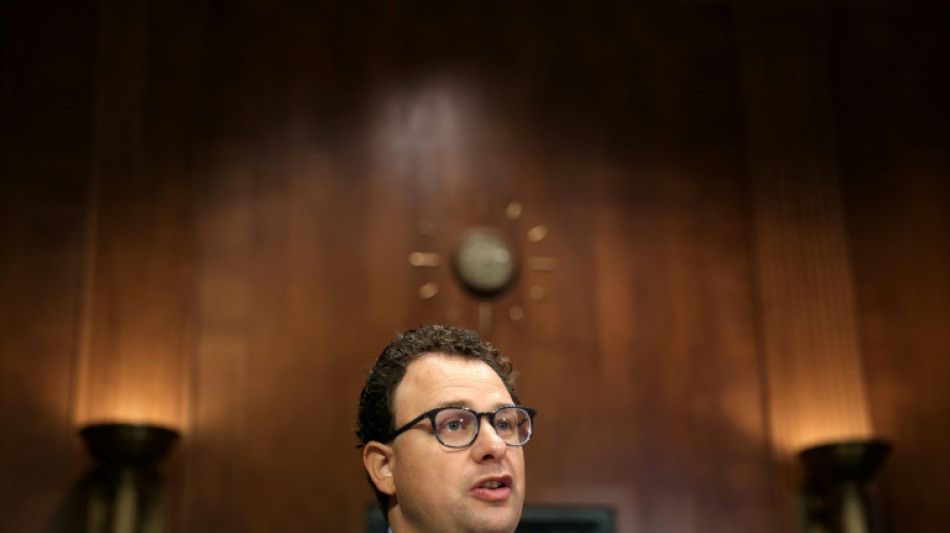
AI's bitter rivalry heads to Washington / Photo: © GETTY IMAGES NORTH AMERICA/AFP

Anthropic's major donation to a political group that competes with an OpenAI-backed organization has highlighted a bitter rift over AI regulation -- a key issue heading into the US midterm elections.

Change text size:

With the artificial intelligence industry rapidly advancing, Democrats and Republicans alike have found themselves squeezed between a powerful tech lobby flush with cash and a broadly wary public.

Leading the charge on the industry side is Leading the Future, a pro-AI super PAC backed by OpenAI's Greg Brockman, venture capital behemoth Andreessen Horowitz, Palantir co-founder Joe Lonsdale, and AI search company Perplexity.

Brockman, OpenAI's longtime president, and his wife Anna are also among the largest recent donors to President Donald Trump's political coffers, to the tune of $25 million last year.

Super PACs are political organizations in the United States that can raise and spend unlimited funds for media campaigns, but not give directly to candidates.

Leading the Future raised $125 million in the second half of 2025, according to official filings, and is co-led by Josh Vlasto -- a former adviser to Fairshake, the crypto-aligned super PAC whose playbook Leading the Future is looking to repeat.

That playbook proved devastatingly effective in the 2024 election cycle, when Fairshake poured money into races against candidates skeptical of cryptocurrency.

Now spooked by the prospect of a repeat in AI, Anthropic has entered the fray.

On Thursday, the company gave $20 million to a competing super PAC, Public First Action, which supports AI guardrails -- effectively setting up a direct fight against Leading the Future.

The group -- whose funders can remain anonymous -- plans to back 30 to 50 candidates from both parties in state and federal races during the midterm cycle.

Founded in 2021 by former AI researchers, Anthropic has grown into a world-leading AI company focused on businesses and software developers.

The company, led by CEO Dario Amodei, is disdained by some in Trump's Washington for its outspoken focus on AI safety and its warnings about the job losses that generative AI could unleash.

The Trump administration has pushed back forcefully, championing a light regulatory touch and giving AI companies free rein to release their latest models without guardrails or pre-release vetting of their products.

White House AI and crypto czar David Sacks recently accused the "left-wing" company of "running a sophisticated regulatory capture strategy based on fear-mongering."

He also accused Anthropic of retaining Democratic-aligned staffers to "lobby for the old Biden AI agenda."

The two groups are also clashing over the Trump administration's repeated — and so far unsuccessful — efforts to ban AI legislation at the state level.

In the absence of federal action, dozens of states have introduced hundreds of proposals to regulate the technology.

- 'Vast resources' -

While not as well financed as its rival, Public First Action argues it has something Leading the Future does not: the backing of public opinion.

Polls show that Americans broadly favor AI safety measures and support a more cautious approach to the technology.

"At present, there are few organized efforts to help mobilize people and politicians who understand what's at stake in AI development," Anthropic said in a statement.

"Instead, vast resources have flowed to political organizations that oppose these efforts."

Amodei has also made visits to Capitol Hill to meet with Democratic Senator Elizabeth Warren to back a ban on the sending of powerful chip technology from Nvidia to China, something the Trump administration supports.

The battle is already playing out in specific races. In Florida, Leading the Future is preparing to spend millions to support Byron Donalds' campaign for governor as Republicans in the state fight over AI legislation.

In New York, Alex Bores — a pro-AI safety congressional candidate and former Palantir employee — has already faced a barrage of attack ads from the group.

"Crazy populists...could be about to break all of this and we can't let that happen," Palantir co-founder Lonsdale said on CNBC in November, defending Leading the Future's mission to fight AI safety advocates.

F.Hammond--TNT

Featured

Carney touts Canada 'pivot' away from US as tariffs rise

Canadian Prime Minister Mark Carney on Tuesday said reducing economic ties with the United States would come at a cost but the long-term benefits were clear, as retaliatory tariffs on US products took effect.

The "Everlasting Battery" Inside Your Joints:UConn Professor's Self-Powered Healing Material just Got Acquired

A material that turns your own movement into medicine has just landed a corporate home. PetVivo Holdings (OTCQX: PETV), a veterinary biotech and biomedical device company focused on treating osteoarthritis in dogs and horses, has acquired PiezoBioMembrane (PBM) — a startup built around a biodegradable implant that generates electricity from the everyday force of a joint in motion, and uses that charge to help regrow cartilage from the inside out. The material is the invention of Thanh Nguyen, a professor of mechanical engineering in UConn's College of Engineering, who founded PBM in 2021 to advance new implementation methods for his work with piezoelectric materials — substances that convert mechanical force into electrical energy. These materials are typically ceramics: hard, brittle, and poorly suited for medical use. But Nguyen's lab developed new forms that are so , flexible, and biodegradable, breaking down naturally within the body over time. wound healing, The materials have already shown strong potential across a range of medical applications, including tissue regeneration, implanted force sensors, and targeted drug delivery in tumor treatment. How It Works biodegradable ultrasound for In the case of arthritis, Nguyen explains, the piezoelectric materials function as an off-the-shelf product that can be implanted or injected directly into the ailing joint — with no drugs, chemicals, or cells required. The everyday force exerted on the joint generates a small electrical charge, which helps regrow healthy cartilage, mimicking the body's natural use of electricity to regenerate tissue. "The body can be electrically stimulated to regrow," Nguyen says. PBM's materials "act like a battery — an everlasting battery that works whenever there is a force applied, and vanishes safely inside the body over time." PetVivo's Vision for the Acquisition PetVivo Holdings CEO John Lai expressed enthusiasm for the merger's potential to improve the lives of companion animals globally. "PBM has developed a compelling functional biomaterials platform with the potential to support the development of multiple medical device and therapeutic product lines across both human and animal health markets," Lai said in a press release. "By combining PBM's scientific innovation with PetVivo's product development capabilities, commercialization experience, regulatory expertise, and public company infrastructure, we believe we can accelerate theadvancement of technologies that may serve as the foundation for numerous future products and strategic opportunities." For Nguyen, the deal is a chance to scale technology that could eventually benefit both animals and people. "PetVivo is an animal health company, but they do have a big passion: pushing the technology towards clinical trials for human use," Nguyen says. "That aligned perfectly with my passion for developing technology that has an impact on human life. That is why I am excited about this merger, which facilitates my passion." A Track Record of Innovation Nguyen's research sits at the intersection of medicine, micro/nanotechnology, and biomaterials. His inventions have earned him publications in prominent scientific journals and media coverage from outlets including NPR. Nguyen founded PBM during the COVID-19 pandemic, a er realizing the material he had developed could be used to create an especially effective, biodegradable face mask — one where the mechanical force of breathing generated an electrical charge that provided an extra layer of protection against viruses. PBM is not Nguyen's only venture in the acquisition pipeline. His other startup, Single-Time Microneedles (STM), is also currently undergoing an acquisition process. STM has pioneered stable, efficient vaccine delivery technology in the form of an adhesive patch. shelfNguyen's focus on biodegradable materials has translated into a remarkably diverse range of medical applications. He has received five R01 grants from the National Institutes of Health (NIH) supporting research in cartilage regeneration, bone regeneration, HIV antibody delivery systems, and biodegradable ultrasound technology to boost the effectiveness of chemotherapy for brain cancer. "Whatever we are working on, we want to show that it works very well in vitro and in vivo," Nguyen says. "Then, when we are at the point of commercialization, we set up a startup or license the technology — or maybe team up with an industry partner." Thanh Nguyen is a professor of mechanical engineering in UConn's College of Engineering. (Courtesy of Thanh Nguyen

Octrado introduces its proprietary trading offering: "Your Skill. Our Capital"

Infrastructure, transparent rules and clear legal boundaries positioned as the core of the funded-account model

Could gas prices return to 2022 highs on US-Iran war?

European gas prices have more than doubled owing to the US-Iran war, just as Europe needs to replenish its reserves ahead of winter.

Change text size: