The National Times - EU chief backs Made-in-Europe push for 'strategic' sectors

EU chief backs Made-in-Europe push for 'strategic' sectors


EU chief backs Made-in-Europe push for 'strategic' sectors
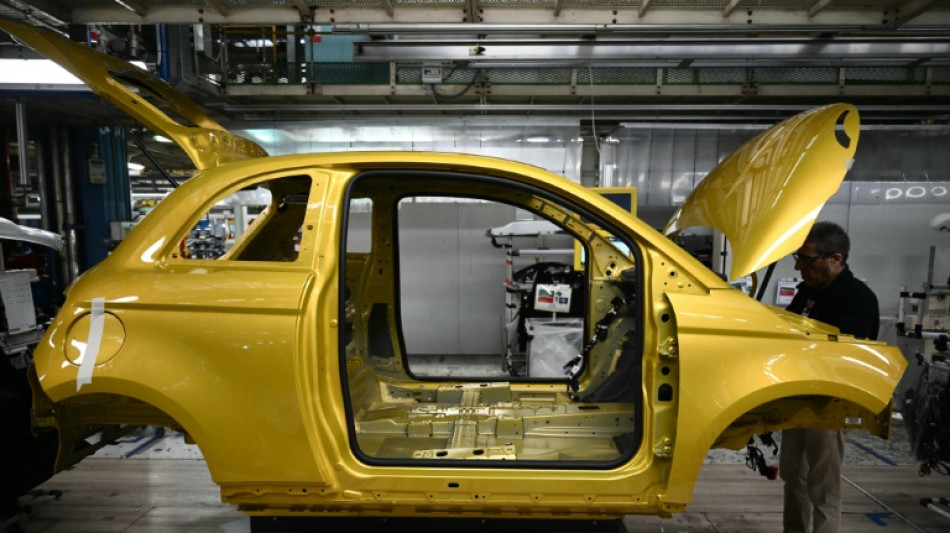
EU chief backs Made-in-Europe push for 'strategic' sectors / Photo: © AFP/File

EU chief Ursula von der Leyen on Monday backed a push to favour European firms over foreign rivals in "strategic" fields, ahead of a leaders' meeting on boosting the bloc's competitiveness.

Change text size:

The EU executive will put forward a proposal later this monthto prioritise European companies in public procurement for key sectors, but the move faces pushback from some member states and partners.

In a letter to the bloc's leaders, von der Leyen argued Europe must be able both to "defend its strategic interests" and support home-grown production.

"A European preference is a necessary instrument that contributes to this objective," she wrote, arguing such a move would "help create lead markets in strategic sectors".

In a draft seen by AFP, the EU executive wants rules that would force companies bidding for public contracts in sectors such as cars and green technology to prove that a certain percentage of their products are made in Europe.

The European Commission has twice delayed its proposal because of fierce internal debates, with some seeking to dilute its scope.

In her letter to leaders, von der Leyen said any European preference "must be underpinned by robust economic analysis and aligned with our industrial priorities, while engaging constructively with trusted partners".

- Worries overseas -

EU industry chief Stephane Sejourne has argued it is time for Europe to have its own version of the "Buy American Act" and "Made in China" to protect firms.

In an op-ed published this month and signed by more than 1,100 CEOs and business leaders, Sejourne said that "whenever European public money is used, it must contribute to European production and jobs".

The "Made in Europe" concept has been popular in France for years and Paris has been seeking tough limitations on defence purchases from outside the EU.

But France's enthusiasm has been met with scepticism from some EU partners.

"They always say 'European', but they think everyone is going to buy French things, so there's still a lot of work to be done," Belgian Prime Minister Bart De Wever told national broadcasters.

There have also been concerns further afield.

Turkish President Recep Tayyip Erdogan wrote a letter to von der Leyen seen by AFP in December in which he warned of the unwanted consequences of such moves for Turkey, which is in a customs union with the bloc.

In particular, Erdogan raised concerns about the impact on the automobile sector, a sentiment echoed by Japanese companies in public and private.

Japanese carmaker Honda urged Brussels to extend the concept to "Made with Common Values", warning that "overly restrictive local content requirements will not necessarily shore up European manufacturing" because of the industry's global nature.

- 'Limited' measures -

Italy and Germany last month offered lukewarm support for the "Made in Europe" idea, cautioning against going too far.

"To protect our interests, this might include making use of EU-preference rules in crucial and core strategic sectors, while taking due account of our trade policy interests and of likeminded partners," Berlin and Rome said.

And last week six member states -- Estonia, Finland, Latvia, Lithuania, the Netherlands and Sweden -- warned that such rules could "risk adding another layer of complex regulation", in a document seen by AFP.

They did not wholly reject the idea but said the measures should be "limited, proportionate and based on a clear understanding of the consequences".

The commission's point of reference is former European Central Bank chief Mario Draghi's landmark 2024 report on the EU economy.

In the report, Draghi advocated for a European preference in defence procurement and in the space sector, albeit in a targeted manner.

Lewis--TNT

Featured

Nearly 1,100 flights cancelled after UK air traffic control glitch

Almost 1,100 flights to and from UK airports were cancelled Tuesday due to what the country's air traffic control service called a technical issue, in the latest glitch to spark travel chaos.

Carney touts Canada 'pivot' away from US as tariffs rise

Canadian Prime Minister Mark Carney on Tuesday said reducing economic ties with the United States would come at a cost but the long-term benefits were clear, as retaliatory tariffs on US products took effect.

The "Everlasting Battery" Inside Your Joints:UConn Professor's Self-Powered Healing Material just Got Acquired

A material that turns your own movement into medicine has just landed a corporate home. PetVivo Holdings (OTCQX: PETV), a veterinary biotech and biomedical device company focused on treating osteoarthritis in dogs and horses, has acquired PiezoBioMembrane (PBM) — a startup built around a biodegradable implant that generates electricity from the everyday force of a joint in motion, and uses that charge to help regrow cartilage from the inside out. The material is the invention of Thanh Nguyen, a professor of mechanical engineering in UConn's College of Engineering, who founded PBM in 2021 to advance new implementation methods for his work with piezoelectric materials — substances that convert mechanical force into electrical energy. These materials are typically ceramics: hard, brittle, and poorly suited for medical use. But Nguyen's lab developed new forms that are so , flexible, and biodegradable, breaking down naturally within the body over time. wound healing, The materials have already shown strong potential across a range of medical applications, including tissue regeneration, implanted force sensors, and targeted drug delivery in tumor treatment. How It Works biodegradable ultrasound for In the case of arthritis, Nguyen explains, the piezoelectric materials function as an off-the-shelf product that can be implanted or injected directly into the ailing joint — with no drugs, chemicals, or cells required. The everyday force exerted on the joint generates a small electrical charge, which helps regrow healthy cartilage, mimicking the body's natural use of electricity to regenerate tissue. "The body can be electrically stimulated to regrow," Nguyen says. PBM's materials "act like a battery — an everlasting battery that works whenever there is a force applied, and vanishes safely inside the body over time." PetVivo's Vision for the Acquisition PetVivo Holdings CEO John Lai expressed enthusiasm for the merger's potential to improve the lives of companion animals globally. "PBM has developed a compelling functional biomaterials platform with the potential to support the development of multiple medical device and therapeutic product lines across both human and animal health markets," Lai said in a press release. "By combining PBM's scientific innovation with PetVivo's product development capabilities, commercialization experience, regulatory expertise, and public company infrastructure, we believe we can accelerate theadvancement of technologies that may serve as the foundation for numerous future products and strategic opportunities." For Nguyen, the deal is a chance to scale technology that could eventually benefit both animals and people. "PetVivo is an animal health company, but they do have a big passion: pushing the technology towards clinical trials for human use," Nguyen says. "That aligned perfectly with my passion for developing technology that has an impact on human life. That is why I am excited about this merger, which facilitates my passion." A Track Record of Innovation Nguyen's research sits at the intersection of medicine, micro/nanotechnology, and biomaterials. His inventions have earned him publications in prominent scientific journals and media coverage from outlets including NPR. Nguyen founded PBM during the COVID-19 pandemic, a er realizing the material he had developed could be used to create an especially effective, biodegradable face mask — one where the mechanical force of breathing generated an electrical charge that provided an extra layer of protection against viruses. PBM is not Nguyen's only venture in the acquisition pipeline. His other startup, Single-Time Microneedles (STM), is also currently undergoing an acquisition process. STM has pioneered stable, efficient vaccine delivery technology in the form of an adhesive patch. shelfNguyen's focus on biodegradable materials has translated into a remarkably diverse range of medical applications. He has received five R01 grants from the National Institutes of Health (NIH) supporting research in cartilage regeneration, bone regeneration, HIV antibody delivery systems, and biodegradable ultrasound technology to boost the effectiveness of chemotherapy for brain cancer. "Whatever we are working on, we want to show that it works very well in vitro and in vivo," Nguyen says. "Then, when we are at the point of commercialization, we set up a startup or license the technology — or maybe team up with an industry partner." Thanh Nguyen is a professor of mechanical engineering in UConn's College of Engineering. (Courtesy of Thanh Nguyen

Octrado introduces its proprietary trading offering: "Your Skill. Our Capital"

Infrastructure, transparent rules and clear legal boundaries positioned as the core of the funded-account model

Change text size: