The National Times - Pakistan's capital picks concrete over trees, angering residents

Pakistan's capital picks concrete over trees, angering residents


Pakistan's capital picks concrete over trees, angering residents
Pakistan's capital picks concrete over trees, angering residents / Photo: © AFP

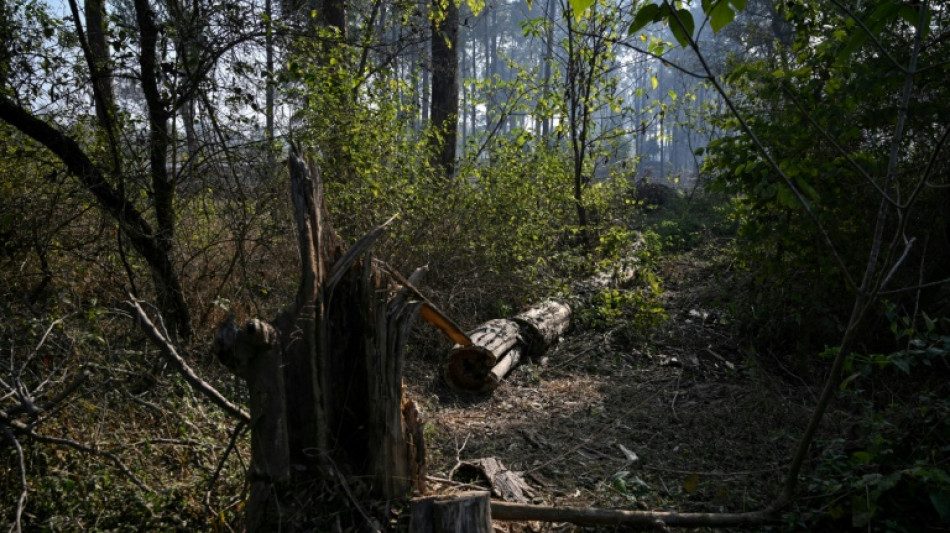
Pakistan's capital Islamabad was once known for its lush greenery, but the felling of trees across the city for infrastructure and military monuments has prompted local anger and even lawsuits.

Change text size:

Built in the 1960s, Islamabad was planned as a green city, with wide avenues, parks and tree-lined sectors.

Many residents fear that vision is steadily being eroded, with concrete replacing green spaces.

Muhammad Naveed took the authorities to court this year over "large-scale tree cutting" for infrastructure projects, accusing them of felling "many mature trees" and leaving land "barren".

The World Wide Fund for Nature (WWF) blamed major infrastructure development, including road construction and monuments, for the mass razing of trees and natural vegetation in Islamabad.

Between 2001 and 2024, the capital lost 14 hectares of tree cover, equal to 20 football pitches, according to Global Forest Watch, though the figure does not account for tree cover gains during the same period.

For Kamran Abbasi, a local trader and resident since the 1980s, it feels like "they are cutting trees everywhere".

"It is not the same anymore," he told AFP.

"Trees are life. Thousands are cut to build one bridge."

- Smog and pollen -

Meanwhile, air quality in Islamabad continues to deteriorate.

Pollution is a longstanding problem, but plants can help by filtering dirty air, absorbing harmful gases and cooling cities.

"Forests act as powerful natural filters... cleaning the air and water, and reducing the overall impact of pollution," Muhammad Ibrahim, director of WWF-Pakistan's forest programme told AFP.

There were no good air quality days in Islamabad last month, with all but two classed as "unhealthy" or "very unhealthy" by monitoring organisation IQAir.

While some trees are felled for infrastructure, officials justify removing others to tackle seasonal pollen allergies that are especially acute in spring.

That problem is largely attributed to paper mulberry trees, which were planted extensively during the city's early development.

"The main reason is pollen allergy," said Abdul Razzaq, an official from the Capital Development Authority (CDA) in Islamabad.

"People suffer from chest infections, asthma and severe allergic reactions. I do too," he told AFP.

The government plans to remove 29,000 pollen-producing trees and plants, according to a recent WWF report.

However, critics argue that pollen allergies are an excuse to justify broader tree-cutting, particularly linked to military and infrastructure projects.

The solution lies not in indiscriminate tree removal, but careful urban planning, experts say, replanting with non-allergenic species -- and greater transparency around development projects in the capital.

- Capital under axe -

In recent months, large bulldozers have been spotted levelling former green belts and wooded areas, including near major highways.

According to WWF and unnamed government officials, some of the cleared land is tapped for monuments commemorating the brief but intense armed conflict between Pakistan and neighbouring India last May.

Other plots were razed to make way for military-linked infrastructure.

"We know that trees are being cut for military-related projects, but there is not much we can do," a government source told AFP, requesting anonymity for security reasons.

"The people in power, the military, can do whatever they want."

Pakistan's powerful military has ruled the country for decades through coups and is deeply involved in the country's politics and economy, analysts say.

At a proposed military monument site along the city's express highway, WWF recorded more than six hectares of land clearing last year, with work continuing in 2026.

It saw "no active plantation... indicating that the clearing is infrastructure driven".

The military did not respond to AFP's request for comment.

Naveed's court case seeking to halt the widespread felling, which is still being heard, argues there is "no excuse" for the tree loss.

If a monument is "deemed essential, why was it not placed in any existing park or public place?", he argues.

In reply to Naveed's petition, authorities said roads and infrastructure projects were approved under regulations dating back to 1992.

A.Robinson--TNT

Featured

Nearly 1,100 flights cancelled after UK air traffic control glitch

Almost 1,100 flights to and from UK airports were cancelled Tuesday due to what the country's air traffic control service called a technical issue, in the latest glitch to spark travel chaos.

Carney touts Canada 'pivot' away from US as tariffs rise

Canadian Prime Minister Mark Carney on Tuesday said reducing economic ties with the United States would come at a cost but the long-term benefits were clear, as retaliatory tariffs on US products took effect.

The "Everlasting Battery" Inside Your Joints:UConn Professor's Self-Powered Healing Material just Got Acquired

A material that turns your own movement into medicine has just landed a corporate home. PetVivo Holdings (OTCQX: PETV), a veterinary biotech and biomedical device company focused on treating osteoarthritis in dogs and horses, has acquired PiezoBioMembrane (PBM) — a startup built around a biodegradable implant that generates electricity from the everyday force of a joint in motion, and uses that charge to help regrow cartilage from the inside out. The material is the invention of Thanh Nguyen, a professor of mechanical engineering in UConn's College of Engineering, who founded PBM in 2021 to advance new implementation methods for his work with piezoelectric materials — substances that convert mechanical force into electrical energy. These materials are typically ceramics: hard, brittle, and poorly suited for medical use. But Nguyen's lab developed new forms that are so , flexible, and biodegradable, breaking down naturally within the body over time. wound healing, The materials have already shown strong potential across a range of medical applications, including tissue regeneration, implanted force sensors, and targeted drug delivery in tumor treatment. How It Works biodegradable ultrasound for In the case of arthritis, Nguyen explains, the piezoelectric materials function as an off-the-shelf product that can be implanted or injected directly into the ailing joint — with no drugs, chemicals, or cells required. The everyday force exerted on the joint generates a small electrical charge, which helps regrow healthy cartilage, mimicking the body's natural use of electricity to regenerate tissue. "The body can be electrically stimulated to regrow," Nguyen says. PBM's materials "act like a battery — an everlasting battery that works whenever there is a force applied, and vanishes safely inside the body over time." PetVivo's Vision for the Acquisition PetVivo Holdings CEO John Lai expressed enthusiasm for the merger's potential to improve the lives of companion animals globally. "PBM has developed a compelling functional biomaterials platform with the potential to support the development of multiple medical device and therapeutic product lines across both human and animal health markets," Lai said in a press release. "By combining PBM's scientific innovation with PetVivo's product development capabilities, commercialization experience, regulatory expertise, and public company infrastructure, we believe we can accelerate theadvancement of technologies that may serve as the foundation for numerous future products and strategic opportunities." For Nguyen, the deal is a chance to scale technology that could eventually benefit both animals and people. "PetVivo is an animal health company, but they do have a big passion: pushing the technology towards clinical trials for human use," Nguyen says. "That aligned perfectly with my passion for developing technology that has an impact on human life. That is why I am excited about this merger, which facilitates my passion." A Track Record of Innovation Nguyen's research sits at the intersection of medicine, micro/nanotechnology, and biomaterials. His inventions have earned him publications in prominent scientific journals and media coverage from outlets including NPR. Nguyen founded PBM during the COVID-19 pandemic, a er realizing the material he had developed could be used to create an especially effective, biodegradable face mask — one where the mechanical force of breathing generated an electrical charge that provided an extra layer of protection against viruses. PBM is not Nguyen's only venture in the acquisition pipeline. His other startup, Single-Time Microneedles (STM), is also currently undergoing an acquisition process. STM has pioneered stable, efficient vaccine delivery technology in the form of an adhesive patch. shelfNguyen's focus on biodegradable materials has translated into a remarkably diverse range of medical applications. He has received five R01 grants from the National Institutes of Health (NIH) supporting research in cartilage regeneration, bone regeneration, HIV antibody delivery systems, and biodegradable ultrasound technology to boost the effectiveness of chemotherapy for brain cancer. "Whatever we are working on, we want to show that it works very well in vitro and in vivo," Nguyen says. "Then, when we are at the point of commercialization, we set up a startup or license the technology — or maybe team up with an industry partner." Thanh Nguyen is a professor of mechanical engineering in UConn's College of Engineering. (Courtesy of Thanh Nguyen

Octrado introduces its proprietary trading offering: "Your Skill. Our Capital"

Infrastructure, transparent rules and clear legal boundaries positioned as the core of the funded-account model

Change text size: