The National Times - Bangladesh Islamist leader seeks power in post-uprising vote

Bangladesh Islamist leader seeks power in post-uprising vote


Bangladesh Islamist leader seeks power in post-uprising vote
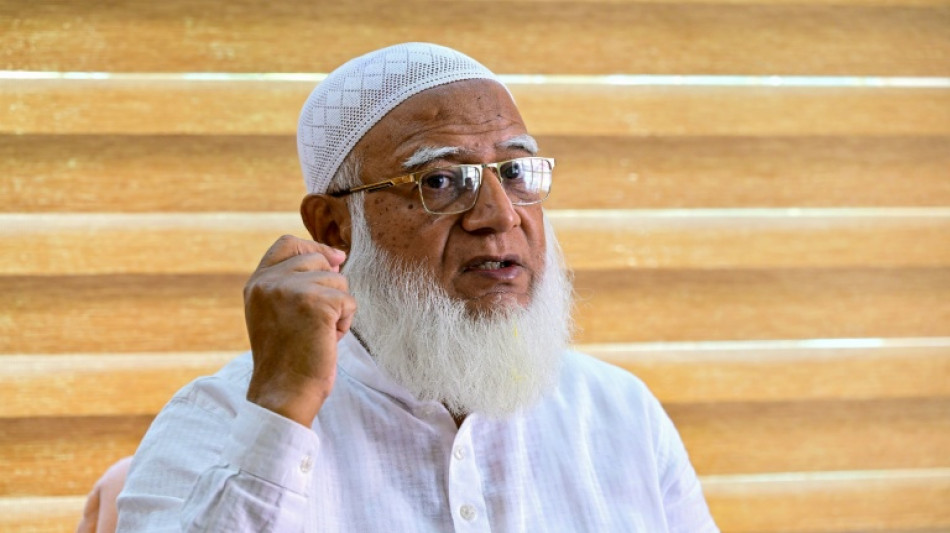
Bangladesh Islamist leader seeks power in post-uprising vote / Photo: © AFP/File

The leader of Bangladesh's largest Islamist party and prime ministerial hopeful Shafiqur Rahman has contested three elections and lost.

Change text size:

This time, he hopes to finally win.

Voters in the Muslim-majority nation will head to the polls on Thursday for the first time since a 2024 uprising toppled Sheikh Hasina, who in her 15 years as prime minister crushed Islamist movements.

Now, Rahman, a 67-year-old doctor and preacher, hopes his 11-party alliance could deliver him victory, worrying critics and minorities who fear an Islamist win could come at their expense.

"I stand for moral renewal in society," Rahman vowed in election promises.

If successful, the former political prisoner could form the first Islamist-led government in constitutionally secular Bangladesh.

Dressed entirely in white, including a flowing white beard, he cuts a distinctive figure on the campaign trail -- where his Jamaat-e-Islami party has put forward only male candidates.

"Good governance is the foundation of stability, peace and prosperity," he said, pledging rule-based and corruption-free leadership.

Ex-prime minister Hasina, who is close to the Hindu-nationalist government of neighbouring India, went after Islamist supporters and cracked down on extremists, killing scores and arresting hundreds.

Since her fall, key Islamist leaders have been released from prison.

- 'Locks' and brooms -

Born in 1958 in the northeastern district of Moulvibazar, Rahman has been a longtime party activist, running first for parliament in 1996, then again in 2001 and 2018.

His wife, Ameena Shafiq, is also a doctor, who was selected for one of the seats in parliament reserved for women in 2018.

Their two daughters and son are also doctors.

As party member and then leader, or "Ameer", Rahman's determined push for power has sparked concern.

Bangladesh has long been led by powerful women, including Hasina and her longtime rival, the late three-time prime minister Khaleda Zia.

Comments Rahman made last year about women's employment, saying he wanted to encourage stay-at-home mothers, provoked a backlash.

"We don't want to lock women at home -- we don't have enough money to buy the locks," he said at a rally.

In January, broom-waving women in Dhaka marched on the streets to symbolically "sweep" him away after a social media post from Rahman had argued women being "pushed out of home in the name of modernity" was "nothing but another form of prostitution".

Rahman later claimed he had been "hacked" and the post was deleted. In carefully worded statements since, he has sought to reassure women.

But some remain sceptical.

"You have to make your position clear regarding women who do not want to be directed by men, and those who belong to other faiths," said Tajnuba Jabin, who quit the National Citizen Party -- formed by student leaders who spearheaded the uprising -- when it allied with Rahman's party for the polls.

"Talk of women's rights sounds hollow unless you have a clear position," she told AFP.

- 'Inclusive' -

Rahman is leading a coalition of Islamist groups, largely ideologically aligned with the Muslim Brotherhood, who sense their biggest opportunity in decades.

His party and several other Islamist outfits have long been dogged by accusations of having supported Pakistan during Bangladesh's 1971 independence war, sparking anger even today.

But the party's student wing has swept victories in university polls across the country of 170 million people, including in Dhaka University, which is often seen as a bellwether for a national vote.

Salahuddin Muhammad Babar, editor of the right-wing newspaper Naya Diganta, said Rahman was "inclusive and accommodative, which are his greatest strengths".

The prospect of him being prime minister has nevertheless shaken minority communities.

Around 10 percent of Bangladesh's population are non-Muslim, most of them Hindu.

Rahman has sought to ease fears, insisting that the rights of minorities would be protected "regardless of caste or creed", and put one Hindu candidate on the party slate.

He has also struck a conciliatory tone on foreign policy, calling for a "balanced" relationship with India.

But Rahman's Jamaat-led coalition also includes hardliners who have demanded restrictions on cultural activities they consider "anti-Islamic", including music and theatre festivals, women's football matches and kite-flying celebrations.

More violent elements have smashed Sufi shrines, and even exhumed a Sufi leader's body and set it on fire.

F.Morgan--TNT

Featured

Nearly 1,100 flights cancelled after UK air traffic control glitch

Almost 1,100 flights to and from UK airports were cancelled Tuesday due to what the country's air traffic control service called a technical issue, in the latest glitch to spark travel chaos.

Carney touts Canada 'pivot' away from US as tariffs rise

Canadian Prime Minister Mark Carney on Tuesday said reducing economic ties with the United States would come at a cost but the long-term benefits were clear, as retaliatory tariffs on US products took effect.

The "Everlasting Battery" Inside Your Joints:UConn Professor's Self-Powered Healing Material just Got Acquired

A material that turns your own movement into medicine has just landed a corporate home. PetVivo Holdings (OTCQX: PETV), a veterinary biotech and biomedical device company focused on treating osteoarthritis in dogs and horses, has acquired PiezoBioMembrane (PBM) — a startup built around a biodegradable implant that generates electricity from the everyday force of a joint in motion, and uses that charge to help regrow cartilage from the inside out. The material is the invention of Thanh Nguyen, a professor of mechanical engineering in UConn's College of Engineering, who founded PBM in 2021 to advance new implementation methods for his work with piezoelectric materials — substances that convert mechanical force into electrical energy. These materials are typically ceramics: hard, brittle, and poorly suited for medical use. But Nguyen's lab developed new forms that are so , flexible, and biodegradable, breaking down naturally within the body over time. wound healing, The materials have already shown strong potential across a range of medical applications, including tissue regeneration, implanted force sensors, and targeted drug delivery in tumor treatment. How It Works biodegradable ultrasound for In the case of arthritis, Nguyen explains, the piezoelectric materials function as an off-the-shelf product that can be implanted or injected directly into the ailing joint — with no drugs, chemicals, or cells required. The everyday force exerted on the joint generates a small electrical charge, which helps regrow healthy cartilage, mimicking the body's natural use of electricity to regenerate tissue. "The body can be electrically stimulated to regrow," Nguyen says. PBM's materials "act like a battery — an everlasting battery that works whenever there is a force applied, and vanishes safely inside the body over time." PetVivo's Vision for the Acquisition PetVivo Holdings CEO John Lai expressed enthusiasm for the merger's potential to improve the lives of companion animals globally. "PBM has developed a compelling functional biomaterials platform with the potential to support the development of multiple medical device and therapeutic product lines across both human and animal health markets," Lai said in a press release. "By combining PBM's scientific innovation with PetVivo's product development capabilities, commercialization experience, regulatory expertise, and public company infrastructure, we believe we can accelerate theadvancement of technologies that may serve as the foundation for numerous future products and strategic opportunities." For Nguyen, the deal is a chance to scale technology that could eventually benefit both animals and people. "PetVivo is an animal health company, but they do have a big passion: pushing the technology towards clinical trials for human use," Nguyen says. "That aligned perfectly with my passion for developing technology that has an impact on human life. That is why I am excited about this merger, which facilitates my passion." A Track Record of Innovation Nguyen's research sits at the intersection of medicine, micro/nanotechnology, and biomaterials. His inventions have earned him publications in prominent scientific journals and media coverage from outlets including NPR. Nguyen founded PBM during the COVID-19 pandemic, a er realizing the material he had developed could be used to create an especially effective, biodegradable face mask — one where the mechanical force of breathing generated an electrical charge that provided an extra layer of protection against viruses. PBM is not Nguyen's only venture in the acquisition pipeline. His other startup, Single-Time Microneedles (STM), is also currently undergoing an acquisition process. STM has pioneered stable, efficient vaccine delivery technology in the form of an adhesive patch. shelfNguyen's focus on biodegradable materials has translated into a remarkably diverse range of medical applications. He has received five R01 grants from the National Institutes of Health (NIH) supporting research in cartilage regeneration, bone regeneration, HIV antibody delivery systems, and biodegradable ultrasound technology to boost the effectiveness of chemotherapy for brain cancer. "Whatever we are working on, we want to show that it works very well in vitro and in vivo," Nguyen says. "Then, when we are at the point of commercialization, we set up a startup or license the technology — or maybe team up with an industry partner." Thanh Nguyen is a professor of mechanical engineering in UConn's College of Engineering. (Courtesy of Thanh Nguyen

Octrado introduces its proprietary trading offering: "Your Skill. Our Capital"

Infrastructure, transparent rules and clear legal boundaries positioned as the core of the funded-account model

Change text size: