The National Times - Trump fuels EU push to cut cord with US tech

Trump fuels EU push to cut cord with US tech


Trump fuels EU push to cut cord with US tech
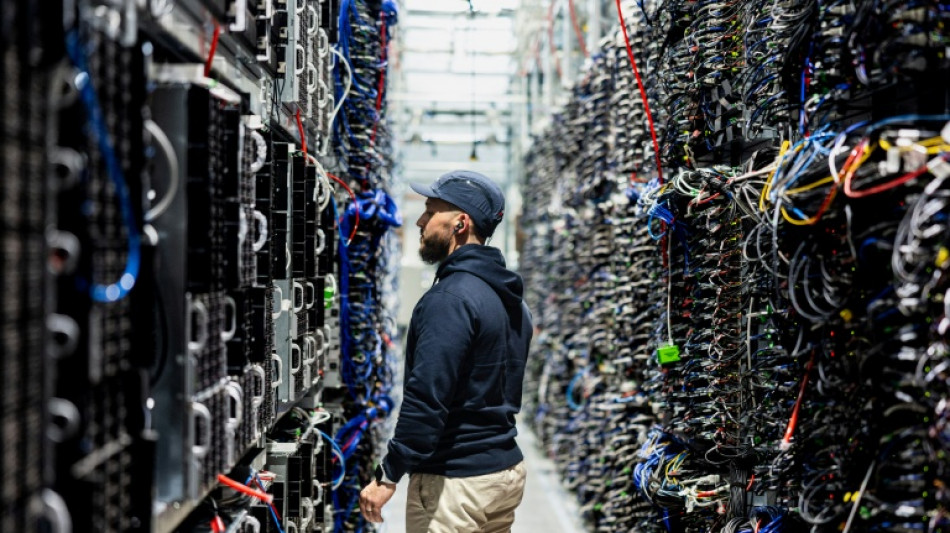
Trump fuels EU push to cut cord with US tech / Photo: © AFP/File

Until President Donald Trump's return a year ago, when the EU talked about cutting economic dependency on foreign powers -- it was understood to mean China. But now Brussels has US tech in its sights.

Change text size:

As Trump ramps up his threats -- from strong-arming Europe on trade to pushing to seize Greenland -- concern has grown that the unpredictable leader could, should he so wish, plunge the bloc into digital darkness.

Since Trump's Greenland climbdown, top officials have stepped up warnings that the European Union is dangerously exposed to geopolitical shocks and must work towards strategic independence -- in defence, energy and tech alike.

The 27-country bloc relies on foreign countries for over 80 percent of digital products, services, infrastructure and intellectual property, according to a 2023 EU report.

Europe has already begun chipping away at its reliance on US tech.

The latest step came last week when France told state employees they would soon be required to use a domestic alternative to tools like Zoom or Microsoft Teams.

Brussels' wake up call came last year when Washington sanctioned judges at the International Criminal Court, cutting them off from US tech such as Amazon or Google.

The move laid bare the US stranglehold over many tools that underpin European lives.

"During the last year everybody has really realised how important it is that we are not dependent on one country or one company when it comes to some very critical technologies," EU tech tsar Henna Virkkunen said.

"Dependencies... can be weaponised against us," she warned.

- Technology 'no longer neutral' -

Virkkunen will in March unveil a major "tech sovereignty" package covering cloud, artificial intelligence and chips -- areas where the EU hopes to build greater autonomy.

"Digital technologies are no longer neutral tools," European Digital SME Alliance's secretary general, Sebastiano Toffaletti, told AFP.

"When core infrastructures like cloud, AI or platforms are controlled from outside Europe, so are the rules, the data and ultimately the leverage."

Among EU member states, France and Germany have been leading the charge.

The northern German state of Schleswig-Holstein became a poster child for digital sovereignty last year by ditching Microsoft in favour of open-source software.

Digitalisation minister Dirk Schroedter said the move was economically-driven at first, before "political tensions" shifted the focus.

"Dominance of a few tech corporations in public infrastructure limits... our flexibility, threatens our security and inflates our software costs," Schroedter told AFP.

Over six months, the state migrated more than 40,000 mailboxes from Microsoft Exchange and Outlook to open-source solutions Open-Xchange and Thunderbird.

There were challenging areas during the transition -- for example in document‑sharing with other federal states and the national government -- but Schroedter said the state showed "digital independence is possible".

Meanwhile, the European Parliament is reviewing its reliance on Microsoft among other tools after a cross-party group of lawmakers urged it to adopt European alternatives.

- 'Leverage against US' -

Moves are also underway at EU level.

French firm Mistral and German giant SAP agreed to work on a European AI-driven cloud solution at a Franco-German digital sovereignty summit in November.

And France, Germany, Italy and the Netherlands teamed up last year in a push to create common European digital infrastructure, steered by the European Commission.

Much of EU policymaking is now being viewed through the prism of sovereignty.

The bloc has long been working on a digital euro, which dozens of economists -- including Thomas Piketty -- called an "essential safeguard of European sovereignty" in an open letter last month.

That follows the 2024 launch of Wero, a European payments alternative to Mastercard, Visa and PayPal backed by several major banks.

But Zach Meyers of CERRE, a Brussels-based think tank, warns the EU must be clear about what "tech sovereignty" is meant to achieve.

If the goal is to withstand political pressure, the EU may be better off focusing on gaining "more leverage against" the United States, Meyers argued.

To that end, he said the most effective strategy is not to cut back on American tech use in Europe but "rather to double down on parts of the tech value chain where the US is dependent on Europe" -- from chip-building machinery to corporate software or telecoms equipment.

H.Davies--TNT

Featured

Nearly 1,100 flights cancelled after UK air traffic control glitch

Almost 1,100 flights to and from UK airports were cancelled Tuesday due to what the country's air traffic control service called a technical issue, in the latest glitch to spark travel chaos.

Carney touts Canada 'pivot' away from US as tariffs rise

Canadian Prime Minister Mark Carney on Tuesday said reducing economic ties with the United States would come at a cost but the long-term benefits were clear, as retaliatory tariffs on US products took effect.

The "Everlasting Battery" Inside Your Joints:UConn Professor's Self-Powered Healing Material just Got Acquired

A material that turns your own movement into medicine has just landed a corporate home. PetVivo Holdings (OTCQX: PETV), a veterinary biotech and biomedical device company focused on treating osteoarthritis in dogs and horses, has acquired PiezoBioMembrane (PBM) — a startup built around a biodegradable implant that generates electricity from the everyday force of a joint in motion, and uses that charge to help regrow cartilage from the inside out. The material is the invention of Thanh Nguyen, a professor of mechanical engineering in UConn's College of Engineering, who founded PBM in 2021 to advance new implementation methods for his work with piezoelectric materials — substances that convert mechanical force into electrical energy. These materials are typically ceramics: hard, brittle, and poorly suited for medical use. But Nguyen's lab developed new forms that are so , flexible, and biodegradable, breaking down naturally within the body over time. wound healing, The materials have already shown strong potential across a range of medical applications, including tissue regeneration, implanted force sensors, and targeted drug delivery in tumor treatment. How It Works biodegradable ultrasound for In the case of arthritis, Nguyen explains, the piezoelectric materials function as an off-the-shelf product that can be implanted or injected directly into the ailing joint — with no drugs, chemicals, or cells required. The everyday force exerted on the joint generates a small electrical charge, which helps regrow healthy cartilage, mimicking the body's natural use of electricity to regenerate tissue. "The body can be electrically stimulated to regrow," Nguyen says. PBM's materials "act like a battery — an everlasting battery that works whenever there is a force applied, and vanishes safely inside the body over time." PetVivo's Vision for the Acquisition PetVivo Holdings CEO John Lai expressed enthusiasm for the merger's potential to improve the lives of companion animals globally. "PBM has developed a compelling functional biomaterials platform with the potential to support the development of multiple medical device and therapeutic product lines across both human and animal health markets," Lai said in a press release. "By combining PBM's scientific innovation with PetVivo's product development capabilities, commercialization experience, regulatory expertise, and public company infrastructure, we believe we can accelerate theadvancement of technologies that may serve as the foundation for numerous future products and strategic opportunities." For Nguyen, the deal is a chance to scale technology that could eventually benefit both animals and people. "PetVivo is an animal health company, but they do have a big passion: pushing the technology towards clinical trials for human use," Nguyen says. "That aligned perfectly with my passion for developing technology that has an impact on human life. That is why I am excited about this merger, which facilitates my passion." A Track Record of Innovation Nguyen's research sits at the intersection of medicine, micro/nanotechnology, and biomaterials. His inventions have earned him publications in prominent scientific journals and media coverage from outlets including NPR. Nguyen founded PBM during the COVID-19 pandemic, a er realizing the material he had developed could be used to create an especially effective, biodegradable face mask — one where the mechanical force of breathing generated an electrical charge that provided an extra layer of protection against viruses. PBM is not Nguyen's only venture in the acquisition pipeline. His other startup, Single-Time Microneedles (STM), is also currently undergoing an acquisition process. STM has pioneered stable, efficient vaccine delivery technology in the form of an adhesive patch. shelfNguyen's focus on biodegradable materials has translated into a remarkably diverse range of medical applications. He has received five R01 grants from the National Institutes of Health (NIH) supporting research in cartilage regeneration, bone regeneration, HIV antibody delivery systems, and biodegradable ultrasound technology to boost the effectiveness of chemotherapy for brain cancer. "Whatever we are working on, we want to show that it works very well in vitro and in vivo," Nguyen says. "Then, when we are at the point of commercialization, we set up a startup or license the technology — or maybe team up with an industry partner." Thanh Nguyen is a professor of mechanical engineering in UConn's College of Engineering. (Courtesy of Thanh Nguyen

Octrado introduces its proprietary trading offering: "Your Skill. Our Capital"

Infrastructure, transparent rules and clear legal boundaries positioned as the core of the funded-account model

Change text size: