The National Times - Rural India powers global AI models

Rural India powers global AI models


Rural India powers global AI models
Rural India powers global AI models / Photo: © AFP

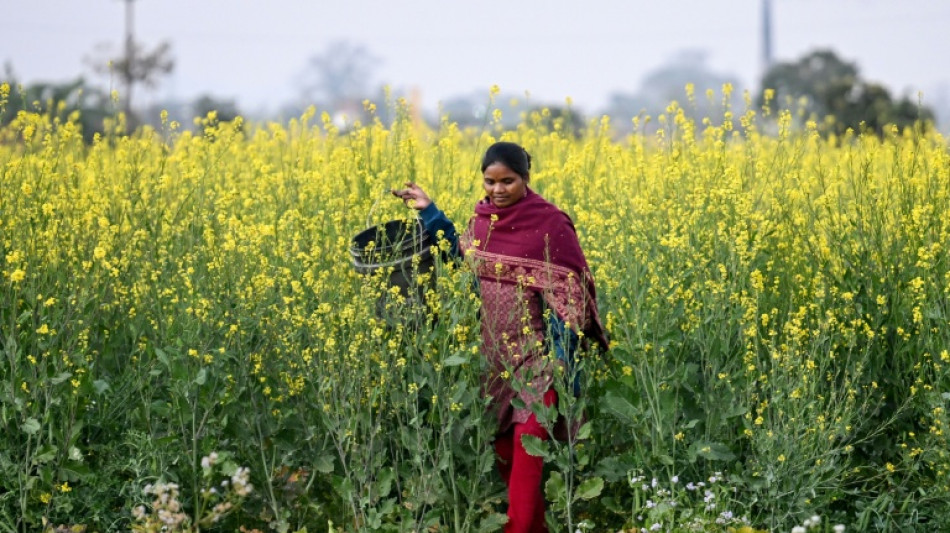
Tending crops by day and then logging on for a night shift of data labelling, 27-year-old Chandmani Kerketta is part of a rising rural Indian workforce helping power an artificial intelligence revolution.

Change text size:

From her home in India's eastern Jharkhand state, Kerketta is part of an AI-driven labour shift that the government hopes will transform lives, including by bringing more women into the workforce.

The work is basic but essential for machine learning: data labelling, annotation and quality checks.

It is the type of information key for driverless cars, for example.

"This job helped me finish my studies, and help at home on our farm," Kerketta said as she tended tomatoes and peas.

Kerketta, from one of India's constitutionally recognised tribal communities, was the first in her family to attend college.

She initially worked as an office assistant at a data-processing firm in Jharkhand's capital Ranchi, where she watched employees working at computers.

But after a computer course at her village school, Kerketta joined an estimated workforce of at least 200,000 annotators in India's villages and small towns -- a growing figure, and roughly half of the world's data-labelling workforce, according to US-based Scry AI.

Rural-based workers can label hundreds of images, videos and documents during eight-hour shifts, either from home or from modest internet-connected centres.

"After my night shift of data work, I sleep a little, and then help in farming," said Kerketta, who now holds a history degree. "In Jharkhand, farming is everything."

Anju Kumari, 25, another rural AI worker in Jharkhand using a national fibre-optic cable network laid by Indian Railways, said the job had provided her with a pathway to a wider world.

Kumari said work can include painstaking "labelling videos frame-by-frame", giving the example of teaching AI whether a person using an ATM is "likely a burglar, or someone genuinely drawing cash".

- Small-town offices -

India, which will host an international AI summit next month, has ambitious plans.

It is now third in a global AI power ranking, overtaking South Korea and Japan, based on more than 40 indicators from patents to private funding calculated by Stanford University's Institute for Human-Centered AI.

In recent months, US tech giants including Google, Microsoft and Amazon have announced multi-billion-dollar investments to build some of the world's biggest data centres in India.

The country is no stranger to back-end work for global technology firms.

Cities such as Bengaluru, Hyderabad and Chennai host major international players, but India's AI push is also expanding into more remote regions.

In Tamil Nadu state, along a winding rural road, Indu Nadarajan travels to a small-town office where she labels images for autonomous vehicles, such as road markings, headlights and animals.

Nadarajan works for NextWealth, an AI-enabling services firm headquartered in Bengaluru, with offices across small towns, supporting clients from the United States, Europe and Asia.

"Many go to Chennai and Bengaluru to learn about AI," said Nadarajan, who has a master's degree in mathematics.

"But being here in our hometown and learning about AI makes me feel very proud."

- 'Anybody can be anywhere' -

Every AI model relies on vast amounts of labelled data, regardless of its complexity. The more precise the labelling, the better the technology performs.

"When I can design a product for a US company 5,000 miles away, why can't I do it from 200 miles away?" said NextWealth founder Sridhar Mitta, 80, a former chief technology officer at Indian tech giant Wipro.

"Anybody can be anywhere and do the things, because the value goes through the internet."

His scattered employees earn anywhere between $275 to $550 a month.

While AI-driven automation may render some jobs obsolete, Mitta believes it will also generate opportunities.

"Micro-entrepreneurship will be the next phase for small towns," Mitta said.

"It may not be another billion-dollar company, but they will produce something which will be useful to the region."

As AI reaches rural India, it is quietly reshaping lives -- particularly for women from conservative backgrounds.

For Amala Dhanapal, a colleague of Nadarajan and the first graduate in her family -- her father is a tailor and her mother a homemaker -- working in AI has changed attitudes.

"It's a big thing," Dhanapal said, saying it both provided a gateway to learning and greater financial independence.

"Most girls find it difficult to even pursue their education due to their family background."

When Kerketta first began her data-annotation work, villagers mocked her.

"Now, when they see me going around on my scooter, they look at me with pride," she said. "Just like I do myself."

F.Morgan--TNT

Featured

Carney touts Canada 'pivot' away from US as Trump levels new threat

Canadian Prime Minister Mark Carney said Tuesday that reducing economic ties with the United States would come at a cost but the benefits were clear, as President Donald Trump threatened new penalties targeting Canada.

Nearly 1,100 flights cancelled after UK air traffic control glitch

Almost 1,100 flights to and from UK airports were cancelled Tuesday due to what the country's air traffic control service called a technical issue, in the latest glitch to spark travel chaos.

Carney touts Canada 'pivot' away from US as tariffs rise

Canadian Prime Minister Mark Carney on Tuesday said reducing economic ties with the United States would come at a cost but the long-term benefits were clear, as retaliatory tariffs on US products took effect.

The "Everlasting Battery" Inside Your Joints:UConn Professor's Self-Powered Healing Material just Got Acquired

A material that turns your own movement into medicine has just landed a corporate home. PetVivo Holdings (OTCQX: PETV), a veterinary biotech and biomedical device company focused on treating osteoarthritis in dogs and horses, has acquired PiezoBioMembrane (PBM) — a startup built around a biodegradable implant that generates electricity from the everyday force of a joint in motion, and uses that charge to help regrow cartilage from the inside out. The material is the invention of Thanh Nguyen, a professor of mechanical engineering in UConn's College of Engineering, who founded PBM in 2021 to advance new implementation methods for his work with piezoelectric materials — substances that convert mechanical force into electrical energy. These materials are typically ceramics: hard, brittle, and poorly suited for medical use. But Nguyen's lab developed new forms that are so , flexible, and biodegradable, breaking down naturally within the body over time. wound healing, The materials have already shown strong potential across a range of medical applications, including tissue regeneration, implanted force sensors, and targeted drug delivery in tumor treatment. How It Works biodegradable ultrasound for In the case of arthritis, Nguyen explains, the piezoelectric materials function as an off-the-shelf product that can be implanted or injected directly into the ailing joint — with no drugs, chemicals, or cells required. The everyday force exerted on the joint generates a small electrical charge, which helps regrow healthy cartilage, mimicking the body's natural use of electricity to regenerate tissue. "The body can be electrically stimulated to regrow," Nguyen says. PBM's materials "act like a battery — an everlasting battery that works whenever there is a force applied, and vanishes safely inside the body over time." PetVivo's Vision for the Acquisition PetVivo Holdings CEO John Lai expressed enthusiasm for the merger's potential to improve the lives of companion animals globally. "PBM has developed a compelling functional biomaterials platform with the potential to support the development of multiple medical device and therapeutic product lines across both human and animal health markets," Lai said in a press release. "By combining PBM's scientific innovation with PetVivo's product development capabilities, commercialization experience, regulatory expertise, and public company infrastructure, we believe we can accelerate theadvancement of technologies that may serve as the foundation for numerous future products and strategic opportunities." For Nguyen, the deal is a chance to scale technology that could eventually benefit both animals and people. "PetVivo is an animal health company, but they do have a big passion: pushing the technology towards clinical trials for human use," Nguyen says. "That aligned perfectly with my passion for developing technology that has an impact on human life. That is why I am excited about this merger, which facilitates my passion." A Track Record of Innovation Nguyen's research sits at the intersection of medicine, micro/nanotechnology, and biomaterials. His inventions have earned him publications in prominent scientific journals and media coverage from outlets including NPR. Nguyen founded PBM during the COVID-19 pandemic, a er realizing the material he had developed could be used to create an especially effective, biodegradable face mask — one where the mechanical force of breathing generated an electrical charge that provided an extra layer of protection against viruses. PBM is not Nguyen's only venture in the acquisition pipeline. His other startup, Single-Time Microneedles (STM), is also currently undergoing an acquisition process. STM has pioneered stable, efficient vaccine delivery technology in the form of an adhesive patch. shelfNguyen's focus on biodegradable materials has translated into a remarkably diverse range of medical applications. He has received five R01 grants from the National Institutes of Health (NIH) supporting research in cartilage regeneration, bone regeneration, HIV antibody delivery systems, and biodegradable ultrasound technology to boost the effectiveness of chemotherapy for brain cancer. "Whatever we are working on, we want to show that it works very well in vitro and in vivo," Nguyen says. "Then, when we are at the point of commercialization, we set up a startup or license the technology — or maybe team up with an industry partner." Thanh Nguyen is a professor of mechanical engineering in UConn's College of Engineering. (Courtesy of Thanh Nguyen

Change text size: