The National Times - Tesla profits tumble on lower EV sales, AI spending surge

Tesla profits tumble on lower EV sales, AI spending surge


Tesla profits tumble on lower EV sales, AI spending surge
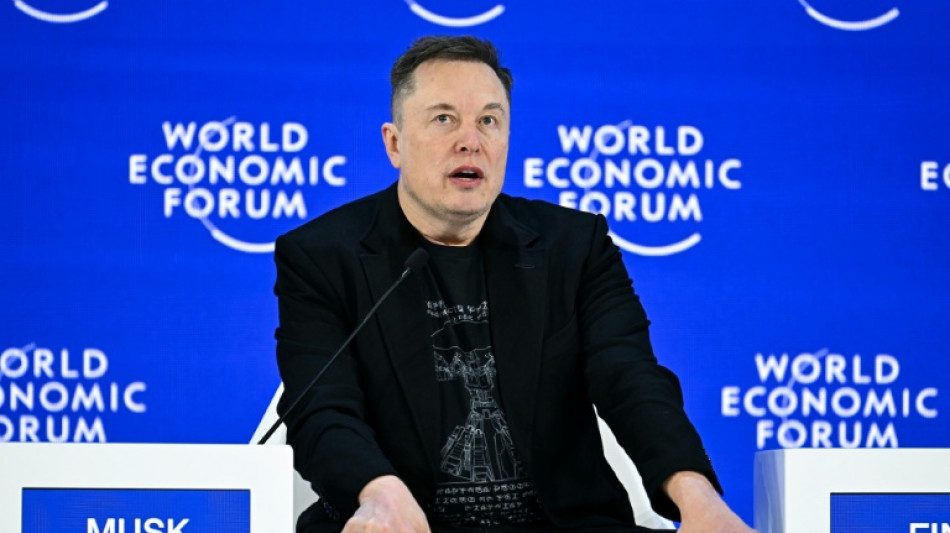
Tesla profits tumble on lower EV sales, AI spending surge / Photo: © AFP/File

Tesla reported a 61-percent drop in fourth-quarter profits on Wednesday due to lower auto sales and increased expenses as CEO Elon Musk ramps up technology investments.

Change text size:

The results conclude a turbulent year for the electric vehicle maker that included a controversial Musk stint in Donald Trump's White House and a shareholder vote in November to award the outspoken CEO a pay package worth as much as $1 trillion in anticipation of massive technology breakthroughs at Tesla.

Profits came in at $840 million in the quarter ending December 31, down from $2.1 billion a year earlier.

Revenues were $24.9 billion, down 3.1 percent.

Lower profits had been expected after Tesla reported a drop in fourth-quarter and full-year auto deliveries early in January.

But a company presentation also cited a litany of other factors. These included higher restructuring costs, increased research and development funding for AI pursuits, the drag from higher tariffs and a decline in revenues tied to emission tax credits following Trump's reversals on US environmental policies.

Tesla's outlook did not include a projection for its expected 2026 auto sales.

In its January 2025 earnings release, Tesla said it expected a "return to growth" in vehicle sales. But Tesla's 2025 auto sales fell nine percent to 1.6 million.

That decline came as Tesla faced increased competition from rivals, including China's BYD, and as Musk faced blowback over his embrace of Trump and far-right political figures.

This time, Tesla said it was focused on "maximum capacity utilization" at factories, adding that total deliveries would depend on "aggregate demand for our products" and other factors.

- Unrealistic timing? -

Shares of Tesla rose sharply in the second half of 2025 after Musk left the White House in spite of weaker financial results that Tesla investment bulls argue are less important compared with Tesla's growth potential.

Musk has touted Tesla's technological prowess on artificial intelligence and autonomous driving as a decisive advantage against rivals that justifies the company's lofty stock market valuation. The company describes itself as in "transition from a hardware-centric business to a physical AI company."

At the World Economic Forum earlier this month, Musk described self-driving cars as "essentially a solved problem at this point," adding that the service will be "very widespread" in the United States by the end of 2026.

But Tesla's "near-term" execution risk is "high," according to a note earlier this month from CFRA Research that pointed to a series of Musk 2026 targets, including the start of significant Cybercab production.

"Musk has a poor track record of delivering on his promises, but the market has been forgiving," CFRA said.

Ahead of Wednesday's release, investors were keen for updates on plans to expand robotaxi beyond initial test venue Austin.

Musk has also spoken optimistically about the expected growth in revenue tied to subscriptions of the driver-assistance "FSD" program. Only 12 percent of Tesla's current fleet participates in the program, Tesla officials said in October.

CFRA analyst Garrett Nelson said he was "skeptical" of Musk's comments suggesting wide deployment of autonomous driving technology as soon as 2026.

Included in Wednesday's earnings press release, Tesla disclosed that it entered into an agreement on January 16 to invest $2 billion in Musk's xAI artificial intelligence venture.

A "framework" accord "builds upon the existing relationship between Tesla and xAI by providing a framework for evaluating potential AI collaborations between the companies," said Tesla, adding that the investment agreement is expected to close in the first quarter.

Tesla shares rose 3.0 percent in after-hours trading.

S.Ross--TNT

Featured

Carney touts Canada 'pivot' away from US as Trump levels new threat

Canadian Prime Minister Mark Carney said Tuesday that reducing economic ties with the United States would come at a cost but the benefits were clear, as President Donald Trump threatened new penalties targeting Canada.

Nearly 1,100 flights cancelled after UK air traffic control glitch

Almost 1,100 flights to and from UK airports were cancelled Tuesday due to what the country's air traffic control service called a technical issue, in the latest glitch to spark travel chaos.

Carney touts Canada 'pivot' away from US as tariffs rise

Canadian Prime Minister Mark Carney on Tuesday said reducing economic ties with the United States would come at a cost but the long-term benefits were clear, as retaliatory tariffs on US products took effect.

The "Everlasting Battery" Inside Your Joints:UConn Professor's Self-Powered Healing Material just Got Acquired

A material that turns your own movement into medicine has just landed a corporate home. PetVivo Holdings (OTCQX: PETV), a veterinary biotech and biomedical device company focused on treating osteoarthritis in dogs and horses, has acquired PiezoBioMembrane (PBM) — a startup built around a biodegradable implant that generates electricity from the everyday force of a joint in motion, and uses that charge to help regrow cartilage from the inside out. The material is the invention of Thanh Nguyen, a professor of mechanical engineering in UConn's College of Engineering, who founded PBM in 2021 to advance new implementation methods for his work with piezoelectric materials — substances that convert mechanical force into electrical energy. These materials are typically ceramics: hard, brittle, and poorly suited for medical use. But Nguyen's lab developed new forms that are so , flexible, and biodegradable, breaking down naturally within the body over time. wound healing, The materials have already shown strong potential across a range of medical applications, including tissue regeneration, implanted force sensors, and targeted drug delivery in tumor treatment. How It Works biodegradable ultrasound for In the case of arthritis, Nguyen explains, the piezoelectric materials function as an off-the-shelf product that can be implanted or injected directly into the ailing joint — with no drugs, chemicals, or cells required. The everyday force exerted on the joint generates a small electrical charge, which helps regrow healthy cartilage, mimicking the body's natural use of electricity to regenerate tissue. "The body can be electrically stimulated to regrow," Nguyen says. PBM's materials "act like a battery — an everlasting battery that works whenever there is a force applied, and vanishes safely inside the body over time." PetVivo's Vision for the Acquisition PetVivo Holdings CEO John Lai expressed enthusiasm for the merger's potential to improve the lives of companion animals globally. "PBM has developed a compelling functional biomaterials platform with the potential to support the development of multiple medical device and therapeutic product lines across both human and animal health markets," Lai said in a press release. "By combining PBM's scientific innovation with PetVivo's product development capabilities, commercialization experience, regulatory expertise, and public company infrastructure, we believe we can accelerate theadvancement of technologies that may serve as the foundation for numerous future products and strategic opportunities." For Nguyen, the deal is a chance to scale technology that could eventually benefit both animals and people. "PetVivo is an animal health company, but they do have a big passion: pushing the technology towards clinical trials for human use," Nguyen says. "That aligned perfectly with my passion for developing technology that has an impact on human life. That is why I am excited about this merger, which facilitates my passion." A Track Record of Innovation Nguyen's research sits at the intersection of medicine, micro/nanotechnology, and biomaterials. His inventions have earned him publications in prominent scientific journals and media coverage from outlets including NPR. Nguyen founded PBM during the COVID-19 pandemic, a er realizing the material he had developed could be used to create an especially effective, biodegradable face mask — one where the mechanical force of breathing generated an electrical charge that provided an extra layer of protection against viruses. PBM is not Nguyen's only venture in the acquisition pipeline. His other startup, Single-Time Microneedles (STM), is also currently undergoing an acquisition process. STM has pioneered stable, efficient vaccine delivery technology in the form of an adhesive patch. shelfNguyen's focus on biodegradable materials has translated into a remarkably diverse range of medical applications. He has received five R01 grants from the National Institutes of Health (NIH) supporting research in cartilage regeneration, bone regeneration, HIV antibody delivery systems, and biodegradable ultrasound technology to boost the effectiveness of chemotherapy for brain cancer. "Whatever we are working on, we want to show that it works very well in vitro and in vivo," Nguyen says. "Then, when we are at the point of commercialization, we set up a startup or license the technology — or maybe team up with an industry partner." Thanh Nguyen is a professor of mechanical engineering in UConn's College of Engineering. (Courtesy of Thanh Nguyen

Change text size: