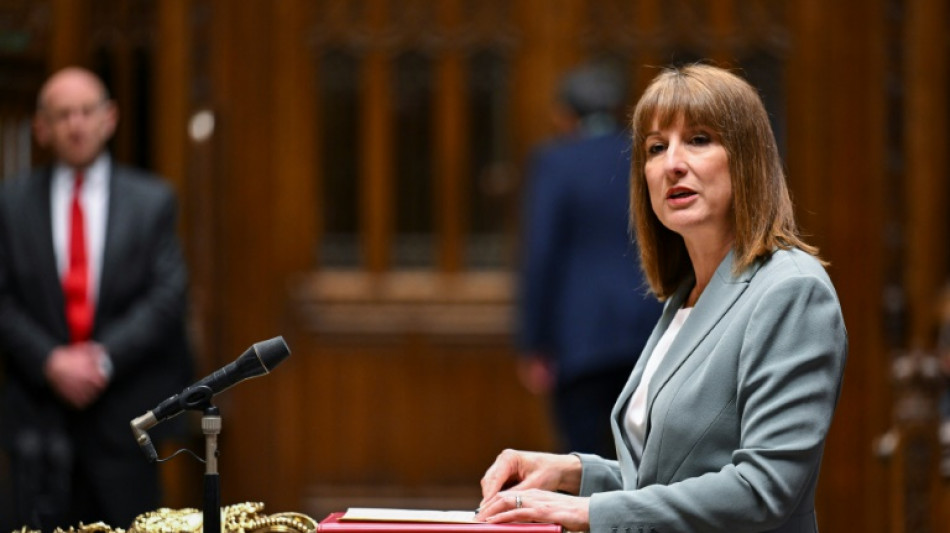
UK govt injects health service with 'record' spending boost / Photo: © House of Commons/AFP
Britain's Labour government on Wednesday laid out its priorities for the coming years, injecting the ailing National Health Service with a "record" £29-billion ($39-billion) annual boost and pumping funds into defence and housing, but scaling back spending on foreign policy.
Finance minister Rachel Reeves set out her much-anticipated Spending Review to grow the UK's sluggish economy, which is under added pressure from US President Donald Trump's tariffs onslaught.
"We are renewing Britain," Reeves told parliament as she announced increased day-to-day spending, adjusted for inflation, to key departments from energy to education.
She said the government was delivering a National Health Service (NHS) "fit for the future".
While the NHS is revered by most Britons, it has been on its knees for years owing to underinvestment and poor morale, resulting in significant strike action in recent times.
Prime Minister Keir Starmer has vowed to cut waiting times for operations and create more doctors' appointments by cutting non-frontline jobs.
The government on Wednesday said it will "cut the asylum backlog" and end "the costly use of hotels to house asylum seekers", saving £1 billion annually.
Labour will instead use municipal housing following a sharp rise in asylum seekers to the UK in recent years.
Amid Russia's war in Ukraine, Reeves confirmed defence spending -- including on intelligence services -- will rise by 2.6 percent of economic output by 2027, helped by cuts to international aid.
"A new era in the threats we face demands a new era for defence and security," she told MPs.
The spending increases forced other key departments to tighten their belts, with cuts to the foreign office and transport budgets, adjusted for inflation.
The main opposition Conservative party, replaced by Labour following a general election last July, insisted that taxes would need to rise to pay for the increased spending.
"This is the spend-now, tax-later review," said Tory spokesperson on the economy, Mel Stride.
Reeves, whose official title is chancellor of the exchequer, had already announced major cuts to public budgets, including the controversial scaling back of disability welfare payments to save more than £5 billion by 2030.
- Balance the books -
Ahead of the review, she amended her fiscal rules to allow the government more headroom for investment.
At the same time, Reeves is looking to balance the books so that tax revenues match day-to-day spending, meaning the government borrows only to invest.
The minister has allowed the Treasury to borrow more, particularly for infrastructure projects across the vital housing and energy sectors.
This has handed her a windfall of £113 billion over five years.
Reeves needed to "balance the books by making cuts to unprotected department budgets", said Joe Nellis, economic adviser at consultancy MHA.
While Britain's economy grew by a better-than-expected 0.7 percent in the first quarter, analysts cautioned that solid expansion was unlikely to be sustained.
"The Autumn Budget will be the big test of whether the government's fiscal plans are holding in the face of global economic headwinds," Deloitte Ian Stewart, chief economist at Deloitte, said following Wednesday's update.
In her inaugural budget in October, Reeves raised a business tax, which is starting to impact on unemployment and wages growth, official data showed Tuesday.
- U-turns -
Also on the eve of the review, the government pledged billions of pounds for Britain's nuclear industry -- including the new Sizewell C power plant.
There was also £86 billion for science and technology by 2030 and more than £15 billion for public transport in England.
Reeves confirmed £39 billion for a programme to build affordable homes over the next 10 years.
The government has also provided up to £750 million for a new national supercomputer in Edinburgh.
Labour on Monday U-turned on a policy to scrap a winter heating benefit for millions of pensioners following widespread criticism, including from within its own party.
P.Johnston--TNT