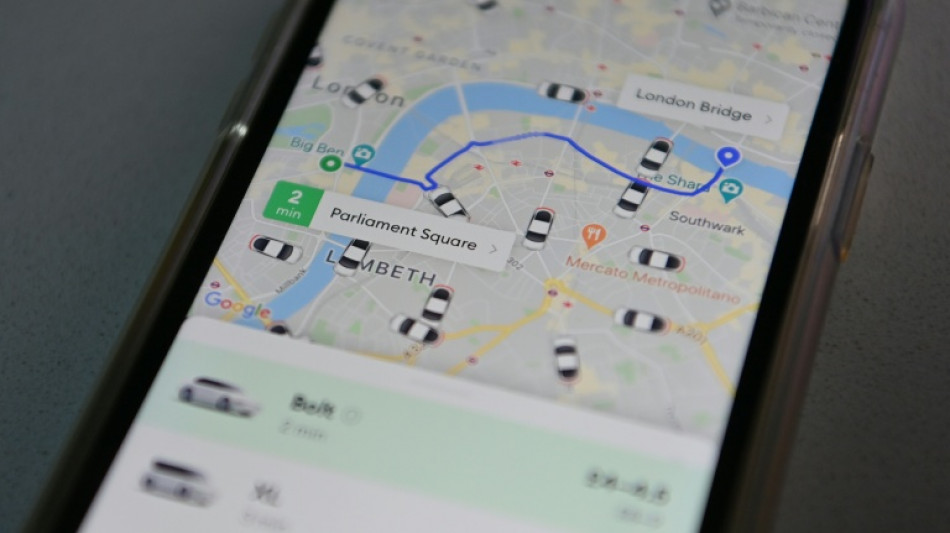
UK rules drivers on Bolt ride-hailing platform are employees / Photo: © AFP
UK drivers using the Bolt ride-hailing platform should be considered employees and have access to rights such as the minimum wage and paid holidays, an employment tribunal ruled Friday.
The tribunal said that its ruling applied to all drivers who used Bolt as their only platform for finding customers.
Leigh Day, the legal firm representing a group of 15,000 drivers, said that the ruling affects all of the estimated 100,000 drivers who use the Bolt app.
The Estonian-based company said that nine in 10 of its drivers use multiple platforms to maximise earnings, so the ruling only applied to 10 percent of its drivers.
The UK Supreme Court made a similar ruling in 2021 in respect to Uber drivers, which was then a world first for the US company. Leigh Day argued that that case should also apply to its clients.
The status of "worker" in the UK is not necessarily formalised by a contract, with those employed under informal arrangements lacking protections afforded to salaried employees, such as sick leave and unemployment insurance.
"This judgment confirms that gig economy operators cannot continue to falsely classify their workers as independent contractors running their own business to avoid providing the rights those workers are properly entitled to," Leigh Day employment team solicitor Charlotte Pettman said.
"We call on Bolt to compensate our clients without further delay."
The legal firm believes the compensation for the backdated underpayment of minimum wage and unpaid holidays owed to the 15,000 drivers could be worth more than £200 million ($259 million), or £15,000 each.
Bolt called the figure "speculative", with another hearing expected to take place next year to decide the figure.
A Bolt spokesman said that "we have always supported the overwhelming majority's choice to remain self-employed independent contractors, protecting their flexibility, personal control and earning potential.
"We will continue to engage with drivers as we carefully review our options, including grounds for appeal, ensuring that we are helping drivers to succeed as entrepreneurs and grow on their own terms," he added.
H.Davies--TNT