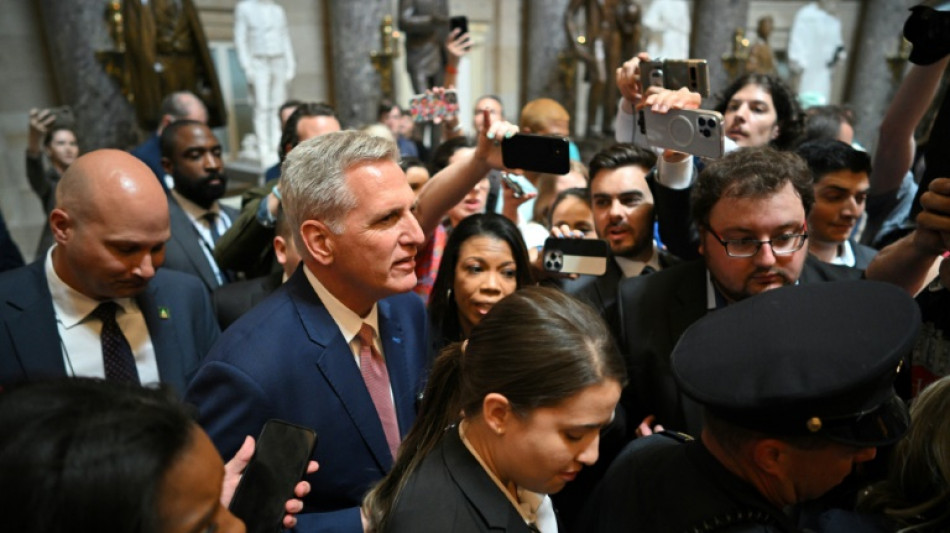
Deal averting US default clears first hurdle / Photo: © AFP
A deal to raise the US debt ceiling passed its first major test in Congress Tuesday, surviving a crucial procedural vote amid a conservative backlash that resurrected the threat of the country's first-ever default.
Lawmakers have until Monday next week to green-light an agreement between Republicans and Democrats to allow more borrowing and ensure the country doesn't miss loan repayments -- a self-inflicted blunder that would send the world's number one economy into a tailspin.
There were sighs of relief across Washington as Republican House Speaker Kevin McCarthy and Democratic President Joe Biden agreed on the 99-page "Fiscal Responsibility Act" at the weekend, agreeing to pare back federal spending and raise the debt ceiling until 2025.
It needs lawmakers' support at a crucial vote Wednesday in the House of Representatives, but briefly looked like it might fall at a preliminary hurdle Tuesday, as the Rules Committee prepared it for a floor debate.
Conservatives voiced anger that proposed spending cuts fall far short of what they agreed in a bill passed by House Republicans last month and party leaders were sweating on the accord making it through the committee to the floor.
In the end it advanced to a vote of the full House scheduled for Wednesday evening after it passed 7-6, with two hard right Republicans -- Chip Roy and Ralph Norman -- joining the four Democrats to vote against it.
The text has been eviscerated by a growing roster of detractors who have already pledged to reject it at the full floor vote, with Roy calling it a "turd sandwich."
- 'Bad deal' -
"Not one Republican should vote for this deal. It is a bad deal. No one sent us here to borrow an additional $4 trillion to get absolutely nothing in return," Roy said at a news conference called by the ultra-conservative Freedom Caucus earlier Tuesday.
The agreement would hold spending flat for 2024 while boosting cash for defense and veterans and clawing back $28 billion in unspent Covid aid money.
Crucially, it will then cap increases at one percent until the year after the presidential election, a win for Biden who would not have to go through a repeat of the crisis at the height of his reelection campaign.
It would increase work requirements on certain federal aid programs but does not make the sweeping reforms to government health insurance that Republicans had pushed for.
"This bill is not everything everyone wanted. But it delivers for the American people on several fronts," senior House Republican Jason Smith told the Rules Committee.
Party strategists were bullish that the grousing from the right did not represent a consensus within the broader party.
"I'm not sure what in the bill people are concerned about," McCarthy said in a brief exchange with reporters in Congress, professing "confidence" it would pass.
- 'Zero' confidence -
But North Carolina Republican Dan Bishop told reporters he had "zero" confidence in McCarthy and threatened to push for his ouster, accusing his party leader of "lying" over the contents of the deal.
Any single lawmaker can introduce a "motion to vacate the chair" -- a concession McCarthy offered the Republican hard right in return for their support for his speakership election in January.
The bill needs 218 votes in the House, with Republican leadership relying on Democratic support as they brace for up to 60 of their 222 members defecting.
Several Democrats have voiced frustration over the new work requirements that would kick into federal aid programs while corporations and the rich are being asked to pay no more in taxes.
The left-leaning Center on Budget and Policy Priorities said in a statement the agreement was a "significant improvement" over the House-passed bill but complained it would leave older, low-income Americans hungry and "should be rejected."
Among the conservative advocacy groups, the Heritage Foundation urged House Republicans to "go back to the negotiating table" while the Club for Growth suggested it would single out Republicans supporting the bill for poor marks in its "congressional scorecard."
F.Morgan--TNT