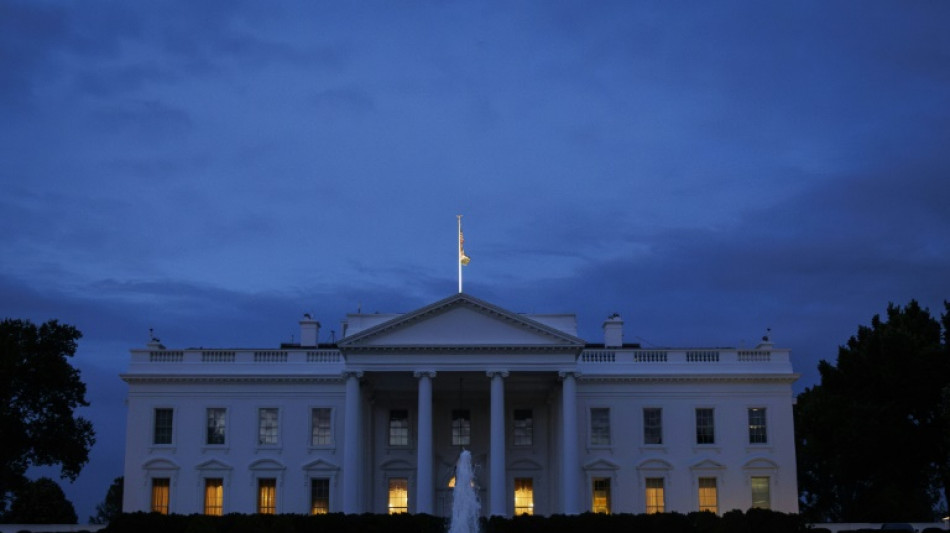
US debt deal faces tough sell in Congress to avoid default / Photo: © AFP
Marathon crisis talks that produced a tentative deal to prevent a cataclysmic US debt default may yet prove the easy part of a process that turned Sunday to the fraught challenge of securing congressional approval.
The agreement announced Saturday by President Joe Biden and Republican leader Kevin McCarthy offers a path back from the default precipice, but it is far from certain that the compromises it contains can garner the support required for swift passage through both houses of Congress.
And all the while the clock is still ticking down to the June 5 "X-date" when the Treasury estimates the government will start to run out of money to pay its bills and debts.
A default would likely have catastrophic consequences, triggering a US recession and risking a global economic meltdown.
The basic framework of the deal suspends the federal debt ceiling, which is currently $31.4 trillion, for two years — enough to get past the next presidential election in 2024 and allow the government to keep borrowing money and remain solvent.
In return, the Republicans secured some limits on federal spending over the same period.
-- Leadership test --
Opposition to the bill comes from an unlikely union of hard-right Republicans who wanted deeper spending cuts and progressive Democrats who wanted no reductions at all.
McCarthy has called for a vote Wednesday in the House where his party's wafer thin majority means passing the bill will require significant Democrat backing to balance out Republican dissent.
Getting the agreement through will be a major test of Biden and McCarthy's leadership of their respective parties and their powers of persuasion as they push to bring doubters on board.
The speaker was on Fox News Sunday in the morning, arguing that the spending limits were a significant victory and insisting that 95 percent of House Republicans were "very excited."
"Maybe it doesn't do everything for everyone, but this is a step in the right direction no one thought we would be at today," McCarthy said.
-- Opposition in Congress --
But the strident tone of the Republican opposition was set by representative Dan Bishop -- a member of the ultra-conservative House Freedom Caucus -- who tweeted a vomit emoji and slammed McCarthy for securing "almost zippo."
McCarthy and Biden were scheduled to speak Sunday to finalis the deal, after which a text of the bill will be released and party whips will go into overdrive to ensure it has enough votes to win passage.
The tentative agreement represents a climb down of sorts by both sides.
Biden had initially refused to negotiate over spending issues as a condition for raising the debt ceiling, accusing the Republicans of taking the economy hostage.
And the big cuts that Republicans wanted are not there, although non-defense spending will remain effectively flat next year, and only rise nominally in 2025.
Biden said "the agreement represents a compromise, which means not everyone gets what they want. That's the responsibility of governing."
The countdown to the June 5 "X-date" means the legislation will still have to clear Congress much more quickly than the normal timetable for even the most uncontroversial bills.
McCarthy is hoping to bring the narrow House majority of 222 Republicans with him, but opposition will come from 35 far-right lawmakers who told him to "hold the line" for more sweeping spending cuts.
That means a large number of Democrats will have to be persuaded to vote with a reduced number of Republicans -- something that rarely happens on big bills.
If a default still occurs, the government wouldn't miss loan repayments until mid-June but in the meantime it would likely have to halt $25 billion in social security checks and federal salaries.
The battle has been monitored closely by the major ratings agencies, with Morningstar and Fitch both warning that they could opt for a downgrade, even if the crisis is averted.
When Barack Obama's administration narrowly averted a default 12 years ago, a ratings downgrade cost taxpayers more than $1 billion in higher interest costs.
N.Roberts--TNT