Lviv's Art Palace turns Aid HQ for Ukrainians under the bombs
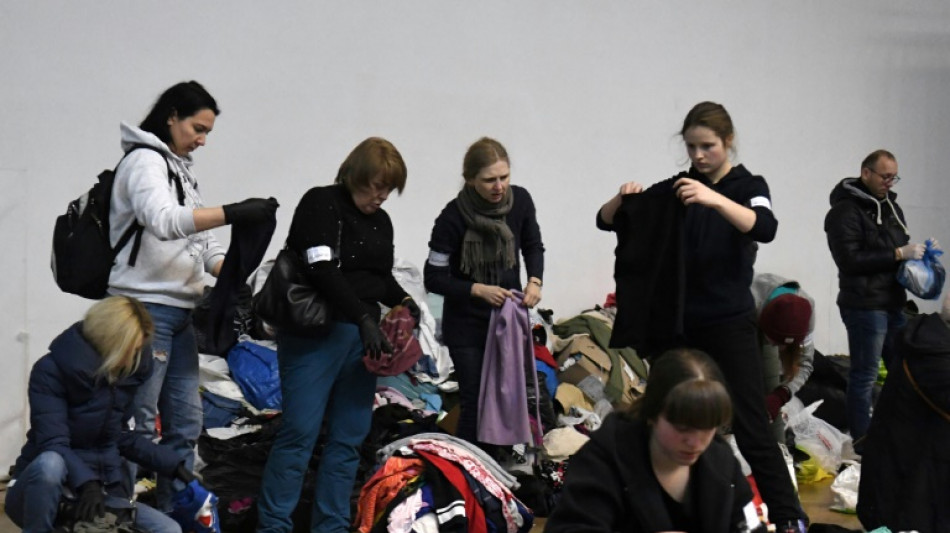
Lviv's imposing Art Palace buzzes from dawn to curfew with volunteers sorting through donations from Europe that are flooding into this west Ukrainian city.
A 36-tonne red lorry pulls into the car park, navigating the mounds of boxes and occasional electricity generator.
In the space of a few minutes, a human chain has formed to unload bags of garments from the truck: men's trousers, women's jackets, baby clothes.
Where is this mountain of goodwill going to?
"All over the place!" says Art Palace director Yuri Vyzniak.
The army and self-defence brigades manning the region's checkpoints will, of course, get a good proportion of the food.
But many ordinary Ukrainians also urgently need aid, including the tens of thousands who have flocked to this city near the border with Poland, some hoping to cross into the European Union.
"For example yesterday we sent out about 50 busloads of aid. We also sent out 40 tonnes of essential supplies to Odessa and, I think, about 10 tonnes to Kherson and Kyiv," says Vyniak, who remains dapper and dynamic despite fatigue.
The Aid HQ, as he calls it, was his idea. He set it up on the morning of February 24 -- "ie, two or three hours after the Russian occupation forces started bombing".
He sounds tired rather than proud.
- 'Independence first' -
The vast hall of the 9,000-square-metre (97,000-square-foot) building hums with volunteers bustling back and forth, occasionally refuelling en route from the vats of "vareniki" -- Ukranian ravioli -- doing the rounds among the workers.
Anyone who stops for a breather is instantly chastised.
Vyzniak commandeers Iryna Dudko to show us round.
In her past life -- before February 24 -- she was a shop assistant.
Now she has her hair scraped back in a ponytail and a bit of paper with "Volunteer" scrawled on it taped hastily to her chest.
"My job is the last thing on my mind at the moment. What we need most is our health. And our independence," she says.
Aid HQ -- a palatial faux Art Nouveau exhibition and cultural centre -- runs like clockwork.
Basement: medicines. Ground floor: food and a stand where displaced people can register their needs. First floor concert hall: children's clothes and toys. Second floor: supplies for newborn babies.
In the newborn section, a dozen women and a handful of men carefully fill black bin bags with packets of nappies, sorted by size. Behind them is a wall of nappies, two metres (6.5 feet) high.
Work slows when the curfew kicks in at 10 pm but it doesn't stop.
"People who have the right passes carry on through the night," Vyzniak says.
- Churches and hipsters -
Similar initiatives are popping up all over Lviv, a gutsy city which sees itself as the country's cultural capital.
Instead of drum and bass gigs and modern art displays, one arts venue in the city centre now houses a refugee reception centre. Some of the displaced sleep in the hipster barber's shop down the road.
"We've got 11 people her just now but we're expecting more from Kharkiv today," says coordinator Stepok. He returned to Lviv in 2020 after seven years in Vietnam and didn't expect then to be manning an emergency shelter for fellow Ukranians.
Help isn't just on hand for people fleeing the bombs. An elderly lady makes her way down the street on her way to the chemist's. A teenager stops her. "We've ordered your pills. They're there," she tells her.
In the Greek-Catholic church of the Holy Apostles Peter and Paul, military chaplain Roman Mentukh is also fielding gifts of aid.
"It's very moving, especially when elderly people come in and you realise they're bringing us the only things they have left," the young man says.
Donations brought to the historic garrison church are destined for the country's soldiers and Mentukh accepts "everything but weapons".
A corner of the nave under the 17th-century oil paintings is piled with camouflage uniforms ready to dispatch to the front.
Mentukh's chokes up when he recounts how he celebrated mass with weeping parishioners on the morning of February 24 and says how proud of them he feels.
"Of course people panicked at first but now they're getting organised... They understand that we all need to be in this together to win this war."
C.Bell--TNT