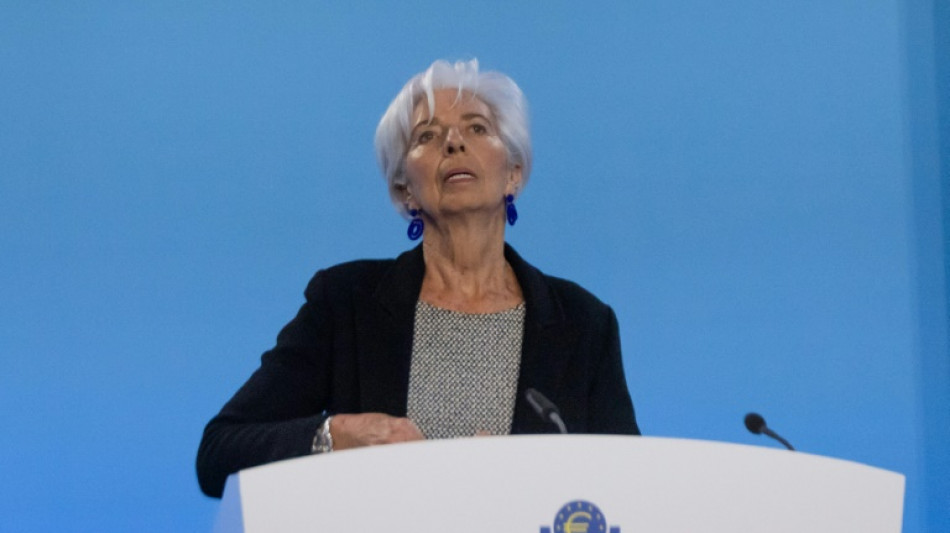
ECB slows rate hikes but signals more needed in inflation fight / Photo: © AFP
The European Central Bank delivered a smaller interest rate hike Thursday as higher borrowing costs begin to take their toll, but said it had "more ground to cover" in fighting red-hot inflation.
It was the seventh-straight increase in the ECB's unprecedented campaign of monetary tightening that began last year after costs of everyday goods began to soar.
The 26-member governing council however decided to downshift to a quarter percentage point lift, from half percentage point hikes at its three previous meetings.
While consumer price rises remain stubbornly above the central bank's two-percent target, closely-watched core inflation -- excluding volatile energy and food costs -- may be easing, while the impact of hikes is starting to weigh on the euro area.
While the ECB did not commit in its statement to future increases, saying its approach would remain "data-dependent", bank president Christine Lagarde signalled there were more to come.
"Based on the information today, we have more ground to cover," she told a press conference after the rate decision was announced. "We are on a journey, and we are not pausing".
Thursday's increase brings the ECB's deposit rate to 3.25 percent, its highest level since 2008.
- Sticky inflation -
The move came a day after the US Federal Reserve made its 10th straight increase, raising borrowing costs by a quarter point, and hinting it could pause on additional hikes.
But US stocks ended lower after Fed Chair Jerome Powell ruled out interest rate cuts in 2023, and fell further on Thursday.
Inflation in the 20 countries that use the euro started surging last year after Russia invaded Ukraine and slashed gas deliveries to Europe, triggering an energy crisis.
Despite the ECB's tightening, consumer prices rose in April after five consecutive months of declines, edging up to 7.0 percent on an annualised basis from 6.9 percent in March.
It peaked at 10.6 percent in October.
But core inflation fell slightly in April, its first drop for months and a potential turning point that gave ammunition to those calling to slow rate hikes.
The impacts of the aggressive rate-hiking campaign are also starting to be felt, with a survey this week showing eurozone banks dramatically tightened lending criteria in the first quarter and that demand for loans has plummeted.
That could have contributed to the ECB deciding to ease its foot off the gas, as policymakers walk a fine line between combating high prices while avoiding pushing the euro area into a sharp downturn.
- 'Final stages' -
But while Lagarde said the impacts of tightening were now visible on the "financing leg" of the economy, the ECB was not sure about the "next leg, which is transmission from banks to the economy".
There had been debate in the run-up to Thursday's meeting about whether the ECB would opt for a quarter-point or half-point increase, and Lagarde confirmed some ECB members had pushed for a bigger hike.
Concerns about the banking sector also resurfaced this week after the collapse of another US lender, and could prompt ECB officials to reflect on the risks of their hikes.
First Republic went under on Monday, after the failure in March of three other regional banks and the takeover of Credit Suisse by rival UBS triggered market turmoil.
Concerns were also growing Thursday about another regional US lender, PacWest, after its shares plummeted.
For ING analyst Carsten Brzeski, "today's decision signals that the ECB has entered the final stage of its current tightening cycle."
"In the current, very complicated macro environment with the lagged impact from previous hikes, banking turmoil, and subdued growth but still sticky inflation, the ECB will tread more carefully," he said.
The central bank also gave more details about another front in its inflation fight -- slimming down its massive bond portfolio built up over years of hoovering up corporate and government debt.
The ECB said the pace of reduction would accelerate, and it would "discontinue the reinvestments" under its asset purchase programme in July.
This brings the monthly pace of balance sheet reduction to 25 billion euros ($27.6 billion), up from 15 billion since it began in March.
C.Blake--TNT