Sri Lanka imposes longest power cuts in 26 years
Sri Lanka on Tuesday announced nationwide seven-and-a-half hour daily power cuts, the longest in more than a quarter of a century, as its foreign exchange crisis leaves it unable to import oil.
The Public Utilities Commission said it was a "black day" for the island nation as it approved the electricity rationing starting Wednesday with power stations running out of fuel.
"What we are facing is not an issue of electricity capacity, but a foreign exchange crisis," the regulatory commission said adding that the country was unable to find dollars to finance oil imports.
The cuts are the longest imposed since 1996, when the country relied on hydropower for as much as 80 percent of its electricity and a prolonged drought saw reservoirs run dry.
Under a new directive, all state institutions were also ordered to switch off their air conditioners in the afternoon to save energy,
Bus operators said they were unable to get diesel and about half the 11,000 fleet did not operate, although a public holiday Tuesday limited the consequences.
"We will see the full impact of the diesel shortage tomorrow when people go back to work," the chairman of the private bus operators association, Gemunu Wijeratne, told AFP.
One of Sri Lanka's biggest fuel suppliers, Lanka IOC, put up prices by as much as 12 percent on Saturday while the state-run Ceylon Petroleum Corporation (CPC) said it too asked the government to allow it to raise prices.
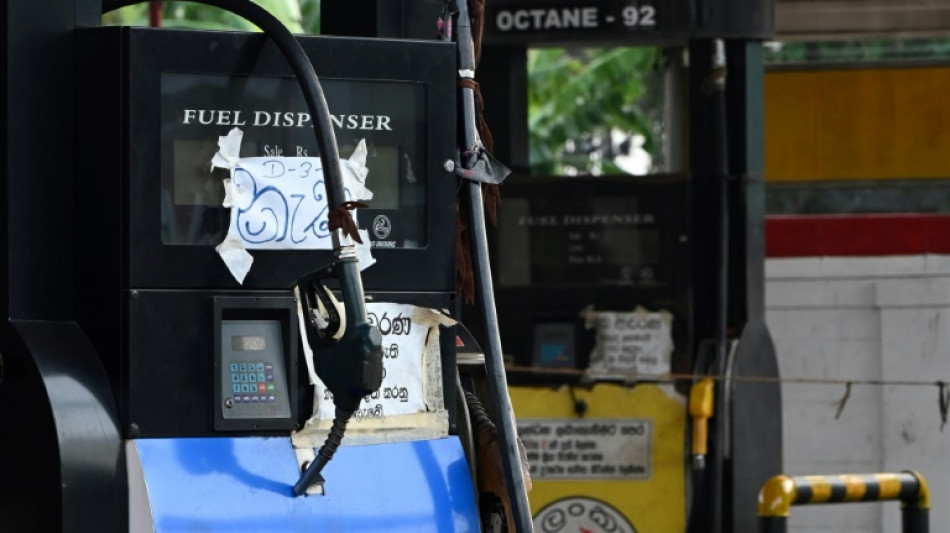
Nonetheless, many pumps were dry on Tuesday and there were long queues at petrol stations which were still open.
Energy minister Udaya Gammanpila told reporters on Saturday that the power crisis had been brought on by the dollar shortage, which he described as the "worst economic crisis since independence" from Britain in 1948.
Sri Lanka's tourism sector, a key foreign-exchange earner, collapsed in the wake of the Covid-19 pandemic, and the government imposed a broad import ban in March 2020 to save foreign currency.
The country is now in the grip of an economic crisis, with widespread shortages, including food, medicines, automotive parts and cement, and supermarkets forced to ration staple foods including rice, sugar and milk powder.
The shortages pushed food inflation to 25 percent in January with overall inflation at 16.8 percent.
B.Cooper--TNT