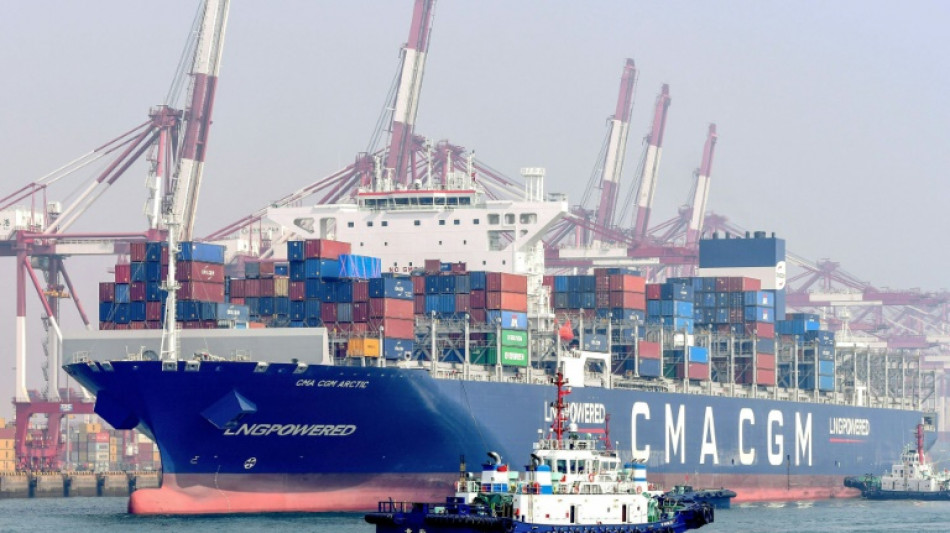
WTO sees 'subpar' 2023 global trade growth / Photo: © AFP/File
The World Trade Organization said Wednesday that 2023 global trade growth would be slightly better than feared, but would remain "subpar", weighed down by the Ukraine war and stubbornly high inflation.
Presenting their annual trade forecast, WTO economists said they expected to see the volume of global merchandise trade slow to 1.7 percent this year -- a full percentage point lower than in 2022.
That forecast was slightly better than feared last October, when the WTO projected 2023 trade growth would be as low as one percent, but a far cry from the 3.4 percent expansion initially projected a year ago.
The uptick from the October forecast was largely linked to China, the WTO said, pointing out that its lifting of Covid pandemic controls were "expected to unleash pent-up consumer demand in the country, in turn boosting international trade".
The organisation's economists also estimated that real global GDP growth at market exchange rates would be 2.4 percent this year, a notch above the 2.3 percent forecast in October.
"Trade continues to be a force for resilience in the global economy, but it will remain under pressure from external factors in 2023," WTO chief Ngozi Okonjo-Iweala said in a statement.
The WTO's report cautioned that "the pace of trade expansion in 2023 is still expected to be subpar, weighed down by the ongoing war in Ukraine, stubbornly high inflation, tighter monetary policy and financial uncertainty".
- Sharp slump -
The organisation said that goods trade was more resilient than expected for most of last year, despite the significant drag exerted by Russia's war in Ukraine.
But in the end, trade growth ticked in at just 2.7 percent in 2022 -- significantly lower than the 3.5 percent projected last October -- following a sharp slump in the fourth quarter, the WTO said.
That was still within the range of what WTO economists projected in their first report on the impact of the Ukraine crisis a year ago, when they expected 2022 trade growth to fall somewhere between 2.4 and 3.0 percent.
It pointed to several factors for the steep decline at the end of the year, including elevated global commodity prices, monetary policy tightening in response to inflation and outbreaks of Covid-19 that disrupted production and trade in China.
Higher commodity prices helped the value of world merchandise trade rise 12 percent in 2022 to $25.3 trillion, the WTO said.
- Financial risks -
"The lingering effects of Covid-19 and the rising geopolitical tensions were the main factors impacting trade and output in 2022 and this is likely to be the case in 2023 as well," said WTO chief economist Ralph Ossa.
He cautioned that "interest rate hikes in advanced economies have also revealed weaknesses in banking systems that could lead to wider financial instability if left unchecked."
"Governments and regulators need to be alert to these and other financial risks in the coming months."
Central bank have hiked interest rates in efforts to tame high inflation, but the higher borrowing costs have raised fears about the health of the financial system following the collapse of three US regional banks last month.
Okonjo-Iweala stressed that the external pressures taking their toll on global trade made "it even more important for governments to avoid trade fragmentation and refrain from introducing obstacles to trade".
She called instead for more multilateral cooperation on trade to "bolster economic growth and people's living standards over the long term."
Looking forward, the WTO said trade growth in 2024 should rebound to 3.2 percent, while GDP picks up to 2.6 percent.
But it warned that "this estimate is more uncertain than usual due to the presence of substantial downside risks, including rising geopolitical tensions, global food insecurity, the possibility of unforeseen fallouts from monetary tightening, risks to financial stability and increasing levels of debt."
P.Sinclair--TNT