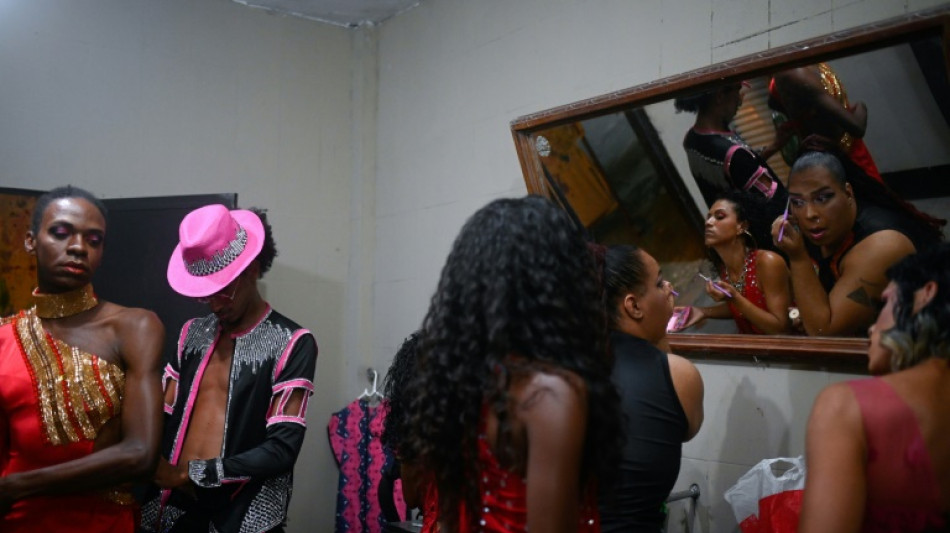
From backstage to spotlight: LGBTQ samba group takes on Rio carnival / Photo: © AFP
For the first time ever, a majority-LGBTQ samba outfit will take part in Rio carnival's famous street parades, flaunting rather than hiding their sexual identity.
In the lead-up to their big debut, members of the group Bangay rehearse at a community center in Rio's Bangu neighborhood.
The glitzy costumes, makeup, samba rhythms and sensual hip movements are just like those associated with the traditional samba schools that have drawn flocks of tourists to Rio for decades.
But there is one big difference, Bangay founder Sandra Andrea dos Santos told AFP. The group's members are "90 percent LGBTQIA+" -- a first for Rio and its annual carnival.
The acronym stands for Lesbian, Gay, Bisexual, Transgender, Queer, Intersex, Asexual. The plus sign is there for any other minority sexual or gender identities not covered by those seven letters.
Group members dance against a rainbow flag backdrop at Bangay's rehearsals.
"It is a place where you can be who you truly are," said Dos Santos, a heterosexual woman who said she created Bangay for gay friends who had previously been relegated to the "back stage" of carnival festivities.
- Dancing can be dangerous -
Members of sexual minorities were often a majority of behind-the-scenes carnival workers -- from costume and float designers to camera operators and sound engineers.
"Why should the LGBT community not also shine?" asked Louise Murelly, a drag queen standing 1.9 meters (6 feet 3 inches) tall without heels, and Bangay's proud parade flag bearer.
But being out in front can be dangerous, too, in a country where 140 transgender people were killed in 2021, according to data from the National Association of Transvestites and Transsexuals of Brazil.
"When we paraded in the street for the first time... people urinated on our members, pulled their hair, laughing," recalled Dos Santos.
"We know that we will face many obstacles ahead, but we are prepared for it. We have come for the fight," she added.
Bangay has recently evolved from an amateur "bloco" group to a full-scale samba school, qualifying to take part in the street parades leading up to this year's main samba contest in Rio's Sambodrome arena.
Normally held in February, carnival was delayed this year due to the Covid-19 epidemic.
Dos Santos hopes that one day Bangay, which currently relies on donations, will become a generator of income so that she can "have a home to house gay people who have nowhere to go, whose families reject them."
For Paulo Cardoso, a musician with the group, Bangay "doesn't only mean carnival, it is my family too."
H.Davies--TNT