How black-and-white became Hollywood's favorite new color
Black-and-white is the hot new trend in Hollywood, where directors of Oscars-contending films such as "Belfast" and "The Tragedy of Macbeth" are embracing monochrome for its storytelling power.
Kenneth Branagh's childhood drama and Joel Coen's Shakespeare adaptation are among a batch of recent acclaimed movies shot either entirely or mainly without color, as filmmakers seek to tap into the medium's inherent sense of historical authenticity and humanizing intimacy.
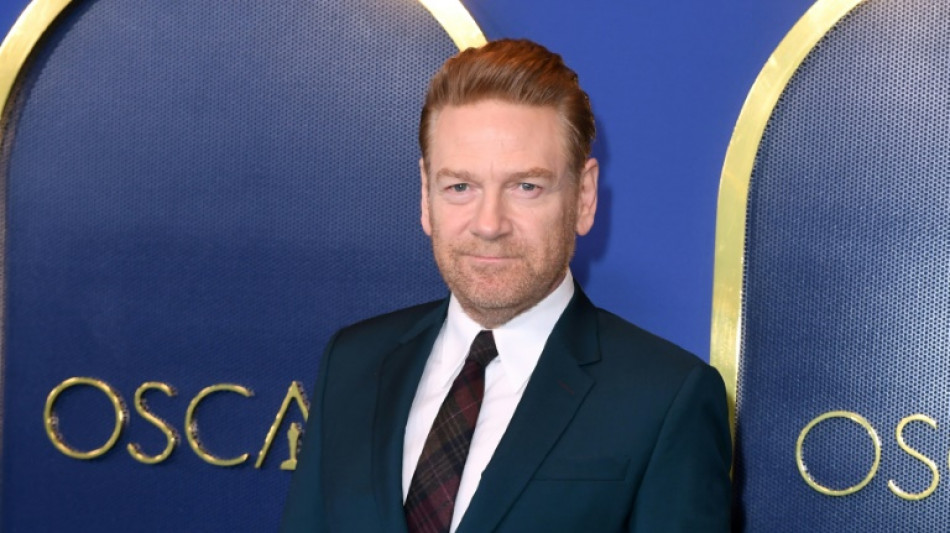
"Color allows you brilliantly to describe people, but black-and-white allows you to feel people," Branagh said of his deeply personal drama about violence in 1960s Northern Ireland, which is up for seven Oscars on Sunday including best picture.
While a "sweeping landscape of a desert or a mountain range" can be made epic by color, "an epic dimension of black-and-white photography, on a massive screen, is the human face."
The choice "makes for a poetic dimension to things that can otherwise seem a little banal," he told AFP.
Meanwhile, "Tragedy of Macbeth" cinematographer Bruno Delbonnel told The New York Times the effect was "meant to bring theatricality" and give the film a timeless quality. Its star Denzel Washington is in the running for best actor.
Monochrome movies have of course continued to exist since they fell out of mainstream favor during the 1950s, when cheaper color technology enabled more directors to emulate the bright tones that had dazzled audiences years earlier in "The Wizard of Oz" and "Gone with the Wind."
In 2012, "The Artist" -- a film that was not just black-and-white but also silent -- won best picture at the Oscars, while the likes of "Roma" and "Mank" have won Oscars for best cinematography more recently.
But this year's colorless contingent has grown.
"We all got together... it was a DGA [Directors Guild of America] meeting," joked Mike Mills, whose family drama "C'mon C'mon" starring Joaquin Phoenix also comes in grayscale, and was nominated at this month's BAFTAs.
"I love black-and-white. I'm super pretentious. I watch a lot of black-and-white films -- they're my heroes' films, right? I just adore them," Mills told AFP.
In "Passing" -- whose star Ruth Negga has been nominated for a batch of awards, winning at the Film Independent Spirit Awards earlier this month -- the format is used to tackle the issue of racism.
Rebecca Hall's directorial debut explores "racial passing," as two childhood friends of mixed racial heritage have a chance encounter in 1920s New York while both are pretending to be white.
"It wasn't just a stylistic choice. I felt that it was a conceptual choice -- to make a film about colorism... that drains the color out of it," Hall said at its Sundance film festival premiere.
"We look at faces, and then we immediately put them into these categorizations... the categorizations become important, but they are also in some senses absurd.
"Nobody is actually black-and-white. Film isn't black-and-white. It's gray."
- 'Crazy abstraction' -
So, why are directors getting on the black-and-white bandwagon now? Is it simply a coincidence?
Experts have pointed to broader trends such as the rise of Instagram and social media, that may explain why audiences -- which in recent times may have seen black-and-white films as "old-fashioned" or "boring" -- are now more willing to give it a go.
"Most Americans have become their own filmmakers and photographers with the ability to slap a filter onto an image and render it in grayscale or sepia or heightened color," wrote Alissa Wilkinson, who covers film and culture for Vox.
"Getting used to seeing color-adjusted images, including black-and-white videos and photos, could make us associate them with the past less. Instead of being bound by history and time, we start to see them as simply aesthetic choices."
The idea that black-and-white is a choice to deliberately look less real than the color-filled world we actually live in has been embraced by several of this year's efforts.
"Black-and-white is such a crazy abstraction, so does a great sort of magic trick on the viewer," said Mills. "'I'm not in the real world anymore. I'm a little kicked off into a story, into art.'"
And there was a more specific reason for his choice in "C'mon C'mon," a movie about an absent uncle -- played by Phoenix -- bonding with his precocious nephew.
"I have this really cute kid -- black-and-white helped just take the cute sting off of it."
F.Hughes--TNT