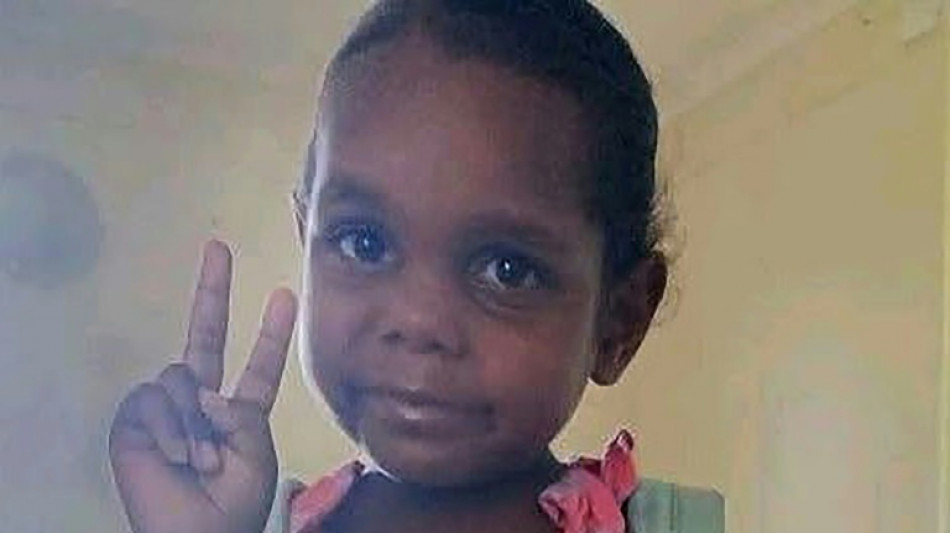
Man charged with murdering Indigenous girl in Australian outback / Photo: © NORTHERN TERRITORY POLICE FORCE/AFP
An Australian man has been charged with murdering a young Indigenous girl in a "deeply distressing" case that has stirred grief across the nation, police said Sunday.
Detectives last week discovered the body of five-year-old Kumanjayi Little Baby near the outback town of Alice Springs.
Soon after they arrested Jefferson Lewis, 47, who had been beaten unconscious after turning himself in to Indigenous community members.
Northern Territory Police said Lewis had now been charged with murder and two counts of rape.
"This remains a deeply distressing matter," police commissioner Martin Dole told reporters.
"Our thoughts are with Kumanjayi's family, loved ones, and the wider community that have been deeply impacted by these events."
An angry crowd clashed with police as Lewis was treated in hospital after his arrest, demanding they hand over the accused child killer so they could punish him themselves.
Images of the riot showed teargas wafting through the air, a police van in flames and crowds yelling at armed officers keeping people at bay.
Many people outside the hospital shouted that Lewis must face "payback", public broadcaster ABC reported, referring to a traditional punishment in central Australian Indigenous communities.
The girl, referred to as Kumanjayi Little Baby at her family's request, had disappeared from an Indigenous community camp, sparking a vast, days-long search on foot, horseback and by helicopter that gripped much of the country.
Australian Prime Minister Anthony Albanese said her death had broken hearts across the nation.
"This is the tragic outcome we were all desperately hoping against.
"No words can measure up to the immensity of the grief her family is going through.
"In their time of terrible loss, all Australians hold them in our hearts."
Robin Granites, a spokesman for the family and an elder of the Warlpiri Indigenous group, called for calm in the community.
"It is time now for sorry business, to show respect for our family and have space for grieving and remembering," he said in a statement.
"We need to be strong for each other, we must respect family and cultural practice."
M.Davis--TNT