The National Times - New Mercedes GLC electric

New Mercedes GLC electric


New Mercedes GLC electric

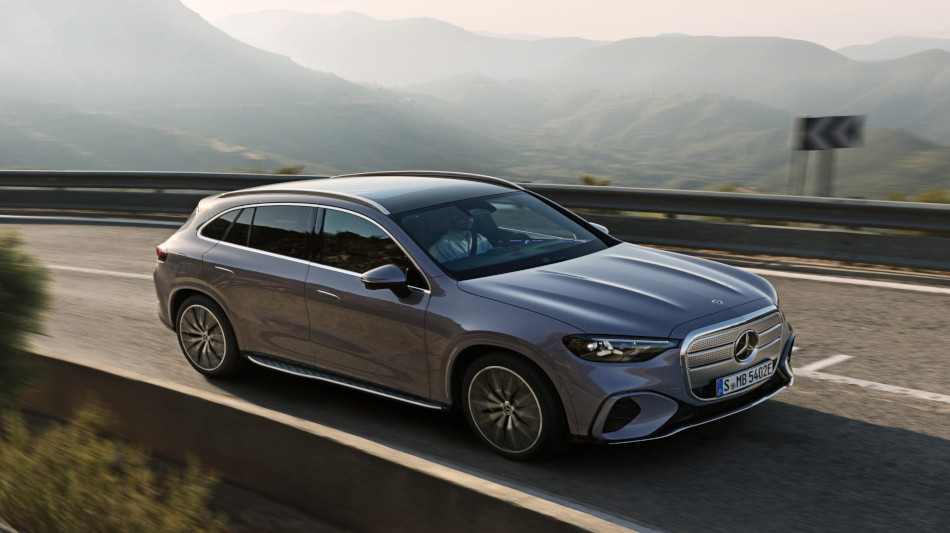
The new fully electric Mercedes‑GLC is scheduled to appear in 2026 as a dedicated EV platform rather than an electrified version of the existing GLC. The initial GLC 400 4MATIC model uses two motors and a 94‑kWh battery, promising up to 406 miles of WLTP range. British order books opened in late‑2025 with deliveries due in mid‑2026. The recommended retail price ranges from £60 350 to £73 350 (about €70 000–86 000).

Technical highlights:
- Dual‑motor all‑wheel drive with 482–489 hp.
94‑kWh battery; WLTP range up to 406 miles; some reports mention 443 miles.
- Fast‑charging at 330 kW, taking 22 minutes from 10–80 %; AC charging at 11 kW (22 kW optional).
4.3 s 0–100 km/h and top speed 210 km/h.
- Interior features include the MBUX Hyperscreen (up to 39 inches), one‑box braking with high recuperation, air suspension with rear‑axle steering and Car‑to‑X connectivity, vegan materials and a spacious boot with 570 litres plus a 138‑litre frunk.

Change text size:

Range assessment:
The headline 406‑mile range is based on WLTP testing; real‑world figures are likely closer to 350–400 miles. Rivals like BMW’s iX3 boast similar or higher ranges, and price–range comparisons will be crucial.

Pricing:
Starting at around £60 350, the electric GLC sits firmly in the premium class. Commentators argue that the price reflects luxury features such as expansive screens and elaborate driver assistance while lacking more advanced self‑driving capabilities.

Public opinion:
Enthusiasts appreciate the generous range, powerful performance and luxurious interior. Critics question the value of huge screens and numerous assistance systems, criticise the bold front‑end design and note that full autonomous driving is missing.

Conclusion:
The new all‑electric GLC delivers impressive specifications and luxury, but its high price and real‑world efficiency remain to be proven. It will appeal to buyers seeking a spacious premium EV SUV, yet some observers call for more emphasis on efficiency and usability.

Featured

Dacia Striker: Stylish and sturdy?

With the new Striker, Dacia is attacking a part of the market where European family estates have become noticeably more expensive, heavier and, in many cases, less distinctive. The 4.62-metre lifestyle wagon is set to start below 25,000 euros, with hybrid, hybrid 4x4 and LPG versions confirmed. That places it as a deliberately down-to-earth alternative to far costlier C-segment cars. A full unveiling is scheduled for June 2026, while availability is expected from late 2026 or early 2027 depending on the market.The images released so far already make Dacia’s ambition clear. The Striker is not meant to be a dull load carrier, but a car with presence. Its stretched aerodynamic profile, raised ride height and almost shooting-brake-like silhouette give it character without making it look bloated. The upright front end, new daytime running light signature and glossy black element linking the rear lamps show that Dacia wants to sell more than price alone in this class. The Striker looks more deliberate, more modern and more carefully drawn than many of the brand’s earlier generations.That is exactly why the key question matters so much: can the Striker back up its design promise with convincing quality? For now, caution is essential. The model has only been shown in an early reveal. Full information on the cabin, equipment and final technical data is still to come. Any definitive judgment on materials, ergonomics, noise insulation and long-term quality would therefore be premature in March 2026.

Skoda Peaq: New all-electric seven-seater

Skoda will launch the Peaq in summer 2026 as its largest electric vehicle to date. The name echoes the word “peak”, reflecting its status at the top of the range. Derived from the Vision 7S concept, the production Peaq adopts the Modern Solid design language with minimalist surfaces, C‑shaped lighting and a Tech‑Deck front end. Official statements emphasise an interior designed for modern families and business users, with a spacious cabin and seven seats. The MEB platform from the Volkswagen Group allows a flat floor and a long wheelbase, promising generous room for passengers and luggage. Skoda highlights “Simply Clever” features such as modular seating, practical storage and recycled materials.Technical details remain scarce, but industry observers expect an around 89 kWh battery enabling a WLTP range of roughly 600 km (373 miles) and DC fast‑charging at up to 200 kW. Dual‑motor versions with all‑wheel drive are likely, offering more power than the current Enyaq. The seven seats should fold flat to create a large cargo area. Positioned above the Kodiaq and Enyaq, the Peaq will become Skoda’s flagship yet is expected to undercut premium rivals such as the Kia EV9 and Hyundai Ioniq 9.

Rip-offs at the petrol pump?

Fuel prices in Germany have become a political flashpoint. Since war broke out in Iran and the Strait of Hormuz was temporarily closed, global oil prices have surged. Crude oil quotations rose by around 20 percent to 84 dollars a barrel, and the wholesale price of diesel in Rotterdam climbed by 26 cents per litre – almost 50 percent. As a result, German motorists were paying an average of Euro 2.156 per litre for diesel and Euro 2.037 for Super E10 in mid‑March 2026.Petrol‑station leaseholders emphasise that they do not set their own pump prices. The industry’s lobbying group accuses the oil majors of selling fuel they bought cheaply at a huge mark‑up – behaviour described as “predatory capitalism”. Leaseholders receive none of the extra margin yet face the anger of customers. Convenience‑store sales are also collapsing because angry motorists buy nothing after filling up.Chancellor Friedrich Merz’s government has responded with a package of measures. Filling stations may raise prices only once a day at noon; price cuts are allowed at any time. Part of the national oil reserve will be released, and the competition authority will get more powers. Critics say this does not go far enough. The social welfare organisation SoVD warns that without a price cap consumers remain at the mercy of suppliers and calls for targeted relief for low‑ and middle‑income households. SPD politicians demand a price cap to ensure that consumers are not “fleeced”, while economy minister Katherina Reiche rejects the idea of a state‑financed fuel subsidy.

Genesis GV60 Magma before launch

The new Genesis GV60 Magma is a model that means much more to the brand than just another particularly powerful version of an existing electric car. The car represents a strategic change of direction. Genesis no longer wants to define itself solely through design, material quality and quiet luxury, but also through its own credible form of high performance. That's exactly why the GV60 Magma is so important: it's not just any sporty derivative, but the first production vehicle in the new Magma world – and thus concrete proof that an idea is now becoming a real product.The timing is well chosen. The regular GV60 has recently undergone noticeable technical and visual enhancements, the brand has visibly sharpened its electric expertise, and at the same time, pressure is growing in the premium segment to more closely link performance, digitalisation and brand character. Many manufacturers today can build fast-accelerating electric cars. The real question is no longer just how much power a vehicle offers, but how this power is staged, dosed and translated into a credible overall picture. This is precisely where Genesis is trying to make its mark with the GV60 Magma.Even at first glance, it is clear that the Magma is not just a cosmetically enhanced GV60. The car appears wider, lower and significantly more taut. The proportions seem more compact, the body sits more solidly on the road, and the add-on parts are not merely decorative, but designed for downforce, cooling and high-speed stability. The front end, side skirts, rear spoiler and air ducts visibly follow a functional logic. Added to this are forged 21-inch wheels, wide tyres and an overall appearance that focuses less on striking aggression and more on controlled presence. This is precisely one of the most interesting features of this vehicle: Genesis is attempting to define sportiness not through visual exaggeration, but through excitement, attitude and technical credibility.The GV60 Magma also goes a clear step beyond the previous GV60 range in terms of drive technology. Two electric motors and all-wheel drive form the technical basis. A very high level of performance is already available as standard, and in boost mode, the system performance increases significantly once again. Genesis is thus positioning the Magma at the top of its electrified model range. Added to this is a top speed that stands out in this class, as well as a 0-200 km/h time that clearly shows that this is not just the usual electric sprint from a standing start, but real performance beyond the first few metres. This is an important difference: many electric cars feel spectacular at first, but lose their punch as speed increases. The GV60 Magma is designed to close this gap.It is noteworthy that Genesis does not present the car as an uncompromising race track machine despite its performance orientation. Instead, the focus is on a synthesis of power, control and premium comfort. The battery is generously sized at 84 kWh, the fast-charging capability remains high, and the official range also shows that the vehicle does not sacrifice everyday usability for mere effect. The GV60 Magma therefore aims not only to impress, but also to remain usable. This is crucial for its future market role.A model like this has to meet two expectations at the same time: it should be emotionally charged, but at the same time not seem exhausting in everyday use. It is precisely this balancing act that Genesis has made its core message.A look beneath the surface shows that the Magma is not just a show car exercise. The chassis, geometry and roll centre have been specifically revised, and electronic damper systems, special control strategies and a braking system tuned to the increased performance level have been added. Equally important is the temperature control of the battery system. Anyone who takes high-performance electric cars seriously knows that raw peak values alone mean little if thermal management, reproducibility and stability cannot keep up. Genesis addresses precisely these points with its own high-performance battery management system. This is an indication that the GV60 Magma is not only designed for spectacular acceleration manoeuvres, but also for repeatable performance under load.The interior is particularly interesting because it encapsulates the actual philosophy of the vehicle. Genesis does not compromise on luxury – on the contrary. High-quality surfaces, a deliberately calm interior, special seats, exclusive material combinations and the brand's characteristic attention to detail remain intact. At the same time, a new, more performance-oriented operating logic has been introduced. A special Magma mode changes the instrument display, bringing important driving data to the fore, while the head-up display focuses more on driving-related information. Added to this are virtual gear changes, specific soundscapes, launch control, drift function and various driving programmes designed to noticeably change the character of the vehicle. This is interesting from both a technological and cultural perspective, because Genesis is bringing two worlds together here: the classic premium idea of calm and sovereignty on the one hand, and the digitally supported performance experience that has been reinvented in the electric age on the other.It is precisely this combination that is likely to distinguish the GV60 Magma from other high-performance electric cars on the market. While some competitors focus on maximum toughness, aggressive communication and the most spectacular driving dynamics possible, Genesis is clearly opting for a more refined interpretation. The driver should feel fast, but not overwhelmed. The car should make its reserves felt without constantly proclaiming how serious it is about them. This approach is anything but insignificant. It could become the actual identity of the model – and, in the long term, the calling card of an entire Magma family.The development programme also shows how seriously Genesis takes this claim. The GV60 Magma was not left in the protected space of a design study, but was put through a broad-based test programme. Winter testing, heat, high altitude, real roads, racetracks and fine-tuning in the home market – all this is part of the preparation. Added to this is the early public demonstration of the concept car in Goodwood, where the Magma gained attention as a serious performance project even before series production began. This is important for the brand's image. Genesis presents high performance not as an afterthought, but as something that has been systematically developed.What the GV60 Magma heralds for the coming years is also exciting. The Magma idea is bigger than this one car. Genesis sees it as a long-term programme and a testing ground for future performance models. The GV60 is a logical starting point for this: it is compact enough for agility, modern enough for a consistently digital interpretation of performance, and emotional enough to bring new substance to the brand. In this sense, the GV60 Magma is a production vehicle – and at the same time a manifesto. It shows how Genesis wants to see its future: electric, fast, luxurious and technically independent.

Change text size: